

Last updated: August 2026 | A practical guide to self-discovery journal prompts, self-reflection, personal growth, clarity, confidence, creativity, and everyday journaling
Sometimes the hardest part of journaling is not writing. It is knowing where to begin:
You open the notebook. You stare at the page. You know there is something on your mind, but you cannot quite reach it. The thoughts are there, but they feel tangled. The feelings are there, but they do not have words yet. The questions are there, but they are too big to answer all at once.
That is where journal prompts help. A good prompt gives your thoughts a starting point. It does not tell you what to think. It simply gives you a door to open.
Self-discovery journaling is about understanding yourself more clearly: what you value, what you want, what drains you, what inspires you, what you are learning, what you are outgrowing, and what kind of life you are trying to build.
You do not need to write perfectly. You do not need to have a dramatic breakthrough. You only need to be honest enough to begin.
At Dingbats*, we believe a notebook can become a quiet place to meet yourself on the page. Whether you write one sentence, one list, or three full pages, the act of putting thoughts on paper can make them easier to see. The page does not judge. It listens.
Quick Overview: What Are Self-Discovery Journal Prompts?
| Question | Answer |
|---|---|
| What are self-discovery journal prompts? | Questions that help you reflect on your thoughts, values, goals, habits, emotions, and identity |
| Who are they for? | Anyone who wants to understand themselves better |
| Do you need journaling experience? | No |
| How long should you write? | A few lines, one page, or as much as feels useful |
| Do prompts need to be answered perfectly? | No |
| Best time to use them | Morning, evening, weekly reviews, quiet moments, or whenever you feel reflective |
| Main benefit | Prompts make journaling easier to start and more focused |
Self-discovery prompts are not about finding one final answer. They are about noticing what is true right now.
Why Use Journal Prompts for Self-Discovery?
Self-discovery can sound big, but it often begins with simple questions.
What do I keep avoiding?
What do I actually enjoy?
What makes me feel like myself?
What do I want more of?
What do I want less of?
What am I ready to change?
What do I already know, but keep ignoring?
Journal prompts help because they give your mind a direction. Instead of trying to write about everything, you respond to one question at a time. That makes reflection feel less overwhelming.
Journal Prompts Can Help You:
| Benefit | How It Helps |
|---|---|
| Find clarity | Turns vague thoughts into visible words |
| Understand patterns | Reveals what keeps coming up |
| Make decisions | Helps you explore what matters |
| Build confidence | Lets you notice your strengths |
| Process change | Gives transitions somewhere to land |
| Set goals | Connects actions to values |
| Be more honest with yourself | Creates space for thoughts you may avoid |
A prompt is not there to give you the answer. It is there to help you hear your own.
How to Use Journal Prompts Without Overthinking
You do not need a complicated system. Choose one prompt. Write the date. Answer honestly. Stop when you feel finished. Some prompts may lead to a few sentences. Others may turn into pages. Some may feel easy. Some may feel uncomfortable. Some may not speak to you at all. That is fine.
Simple Ways to Use Prompts
| Method | How to Do It |
|---|---|
| One prompt a day | Answer one question every morning or evening |
| Weekly reflection | Choose three prompts at the end of each week |
| Theme journaling | Spend a week on confidence, goals, creativity, or change |
| Timed writing | Set a timer for 5, 10, or 15 minutes |
| List format | Answer in bullet points instead of paragraphs |
| Repeat prompts | Return to the same question every month |
| Random selection | Pick a prompt without planning too much |
There is no perfect way to answer a journal prompt. The best answer is the one that feels true.
Self-Discovery Journal Prompts for Identity
These prompts help you explore who you are, what matters to you, and how you see yourself beyond roles, expectations, and routines.
- Who am I when no one is expecting anything from me?
- What parts of myself feel the most natural?
- What parts of myself have I been hiding or minimizing?
- What do I want to be known for?
- What do I value more now than I used to?
- What do I care about, even when no one notices?
- What makes me feel most like myself?
- What labels or expectations no longer fit me?
- What kind of person am I becoming?
- What do I want to understand about myself this year?
Self-Discovery Journal Prompts for Values
Your values shape your choices, even when you do not name them clearly. These prompts help you notice what you want your life to be built around.
- What matters to me most right now?
- What do I want to protect my time for?
- What do I admire in other people?
- What do I refuse to compromise on?
- When do I feel proud of myself?
- What kind of life feels meaningful to me?
- What do I want more of in my everyday routine?
- What do I want less of?
- What is something I say matters to me, but do not make enough time for?
- What values do I want my decisions to reflect?
Self-Discovery Journal Prompts for Goals
Goals become more useful when they are connected to who you are, not just what you think you should achieve.
- What goal feels genuinely exciting to me?
- What goal feels like pressure rather than desire?
- What am I working toward right now?
- Why does this goal matter to me?
- What small step would make this goal feel less overwhelming?
- What have I been postponing?
- What would I try if I stopped needing it to be perfect?
- What does progress look like this month?
- What goal would make my daily life better, not just look impressive?
- What do I want to celebrate by the end of this year?
Self-Discovery Journal Prompts for Confidence
Confidence is not only about feeling fearless. Sometimes it is about noticing what you have already survived, learned, practiced, and built.
- What is something I am better at than I was a year ago?
- What do I rarely give myself credit for?
- When have I shown courage?
- What strength do people often see in me?
- What strength do I need to see in myself?
- What would I do differently if I trusted myself more?
- What is one decision I made that I am proud of?
- What helps me feel capable?
- What do I need to stop apologizing for?
- What would I say to myself if I were being kinder?

Self-Discovery Journal Prompts for Change
Change can feel exciting, uncomfortable, confusing, or all three at once. These prompts help you understand what is shifting and what you may be ready to release.
- What part of my life feels like it is changing?
- What am I ready to let go of?
- What am I still holding onto, even though it feels heavy?
- What habit, belief, or routine no longer supports me?
- What new version of myself am I getting to know?
- What feels uncertain right now?
- What feels possible right now?
- What lesson keeps repeating until I pay attention?
- What do I need to accept before I can move forward?
- What is one small change I can make this week?
Self-Discovery Journal Prompts for Relationships
Relationships can teach you a lot about your needs, boundaries, communication, and patterns. These prompts can help you reflect without turning the page into blame.
- Which relationships make me feel most like myself?
- Which relationships leave me feeling drained?
- What do I need more of in my relationships?
- What do I need less of?
- How do I show care to the people I love?
- How do I like to receive care?
- What is something I need to communicate more clearly?
- Where do I need better boundaries?
- What relationship pattern do I want to change?
- Who makes me feel supported, understood, or encouraged?
Self-Discovery Journal Prompts for Creativity
Creativity is not only about art. It is about noticing, connecting, imagining, experimenting, and allowing ideas to exist before they are perfect.
- What kind of ideas keep returning to me?
- What do I want to make, write, build, or explore?
- What creative activity makes time feel different?
- What would I create if I did not worry about whether it was good?
- What inspires me lately?
- What am I curious about?
- What do I want to learn just because it interests me?
- What is one idea I keep dismissing too quickly?
- What does my creative side need more of?
- What would it look like to make something just for myself?
Self-Discovery Journal Prompts for Everyday Clarity
Not every journal entry needs to be deep. Sometimes the most useful prompts are the simple ones that help you understand the day in front of you.
- What is taking up the most space in my mind today?
- What do I need to focus on first?
- What can wait?
- What would make today feel lighter?
- What do I know for sure right now?
These prompts are simple, but they can be powerful because they bring you back to the present. You do not always need a big life answer. Sometimes you need the next honest sentence.
How to Make Self-Discovery Journaling a Habit
A journaling habit works best when it feels easy to return to. Do not make the rules too strict. Do not wait until you have perfect handwriting, a quiet morning, a full hour, or a beautifully organized system. Start with what you have. A notebook, a pen, and one question are enough.
Simple Habit Tips
| Tip | Why It Helps |
|---|---|
| Keep your notebook visible | Makes journaling easier to remember |
| Use one prompt at a time | Prevents overwhelm |
| Write the date | Helps you see your thoughts over time |
| Let entries be messy | Reduces pressure |
| Repeat prompts monthly | Shows how your answers change |
| Use bookmarks | Helps you find your current place |
| Keep a pen nearby | Removes one small barrier |
| Do not quit because you miss a day | Makes the habit sustainable |
Journaling should not feel like another task to perform. It should feel like a place to return.
How to Choose the Right Prompt
The best prompt is not always the deepest one. It is the one you actually want to answer. Choose a prompt that creates a small reaction. Curiosity, resistance, relief, interest, discomfort, recognition, any of those can mean there is something worth exploring.
Choose a Prompt Based on What You Need
| If You Feel… | Try Prompts About… |
|---|---|
| Unclear | Everyday clarity |
| Stuck | Change or goals |
| Disconnected from yourself | Identity or values |
| Unsure what you want | Goals or creativity |
| Low on confidence | Confidence |
| Emotionally crowded | Relationships or clarity |
| Inspired but scattered | Creativity |
| Ready for a reset | Values or change |
You do not need to answer every prompt.vYou can skip, return, repeat, or rewrite. The notebook belongs to you.

Self-Discovery Journaling Mistakes to Avoid
The biggest mistake is trying to make self-discovery journaling look perfect. It does not need to be neat, poetic, impressive, or shareable. It does not need to lead to instant clarity. Some entries may feel repetitive. Some may feel unfinished. Some may only make sense later. That is part of the process.
Common Mistakes
| Mistake | Better Approach |
|---|---|
| Trying to sound wise | Write what is true first |
| Answering too many prompts at once | Choose one and go deeper |
| Judging your answers | Let the page be honest |
| Waiting for the right mood | Start with one sentence |
| Making every entry long | Short entries still count |
| Avoiding repeated thoughts | Notice the pattern |
| Sharing too quickly | Keep some writing private |
| Expecting one prompt to solve everything | Let clarity build slowly |
Self-discovery is not a single journal entry. It is a conversation with yourself over time.
Why a Notebook Helps With Self-Discovery
A notebook gives your thoughts a physical place to land.
When a thought stays in your mind, it can feel vague or bigger than it is. When it moves onto paper, you can see it more clearly. You can reread it, question it, continue it, or leave it behind. The page helps you slow down enough to notice what you actually think.
A Notebook Can Hold:
| Page Type | What It Gives You |
|---|---|
| Lists | Quick clarity |
| Long entries | Deeper reflection |
| Repeated prompts | Patterns over time |
| Questions | Space for uncertainty |
| Goals | Direction |
| Notes to yourself | Encouragement |
| Messy thoughts | Release |
| Ideas | Creative possibility |
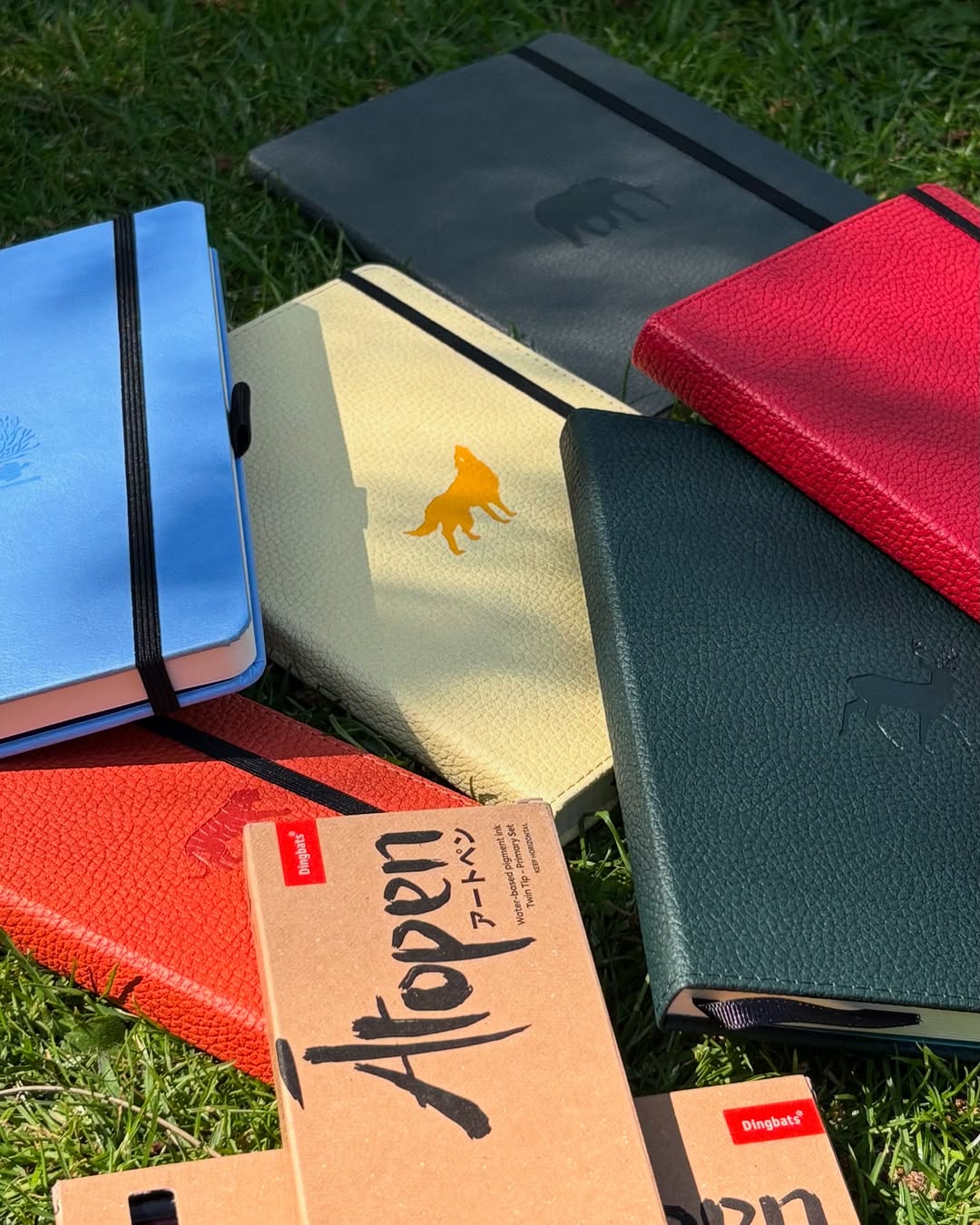
At Dingbats*, our notebooks are made for real writing: the polished thoughts, the unfinished thoughts, the practical lists, the private reflections, the creative sparks, and the questions you return to again and again. A blank page does not demand certainty. It simply gives you space.
Frequently Asked Questions
What are self-discovery journal prompts?
Self-discovery journal prompts are questions designed to help you reflect on your thoughts, values, goals, relationships, habits, identity, creativity, and personal growth.
How do I start self-discovery journaling?
Start by choosing one prompt, writing the date, and answering honestly. You can write a few lines, a list, or a full page. There is no perfect format.
What should I write in a self-discovery journal?
You can write about your values, goals, feelings, habits, relationships, memories, ideas, decisions, confidence, creativity, and the things you are learning about yourself.
How often should I use journal prompts?
You can use journal prompts daily, weekly, monthly, or whenever you feel stuck. Consistency helps, but the practice does not need to be rigid.
Do I have to answer journal prompts in order?
No. Choose the prompt that feels most relevant. You can skip around, repeat prompts, or return to certain questions later.
Are journal prompts good for beginners?
Yes. Journal prompts are especially helpful for beginners because they give you a starting point and make the blank page feel less intimidating.
Can I repeat the same journal prompt?
Yes. Repeating the same prompt over time can be useful because your answers may change as your life, priorities, and perspective change.
Our Verdict
At Dingbats*, we create notebooks for the thoughts that deserve space: the everyday notes, the private reflections, the plans, the questions, the creative ideas, and the words you did not know you needed to write until the page was open. Choose a prompt. Open your notebook. Write the first honest thing. Let the rest follow.


Leave a comment
This site is protected by hCaptcha and the hCaptcha Privacy Policy and Terms of Service apply.