
Last updated: July 2026 | A practical guide to stopping procrastination, breaking tasks down, clearing mental clutter, building focus, and using Dingbats* notebooks to get started
Procrastination does not always look like doing nothing. Sometimes it looks like opening ten tabs. Rewriting the same to-do list. Checking your inbox again. Tidying your desk before starting. Waiting until you “feel ready.” Researching the task instead of doing it. Moving it to tomorrow. Then tomorrow again.
From the outside, procrastination can look like laziness. But most of the time, it is not that simple.
People procrastinate when a task feels too big, too vague, too boring, too difficult, too emotional, or too full of decisions. The mind avoids the task because it does not know where to begin, or because beginning feels uncomfortable.
That is where a notebook can help.
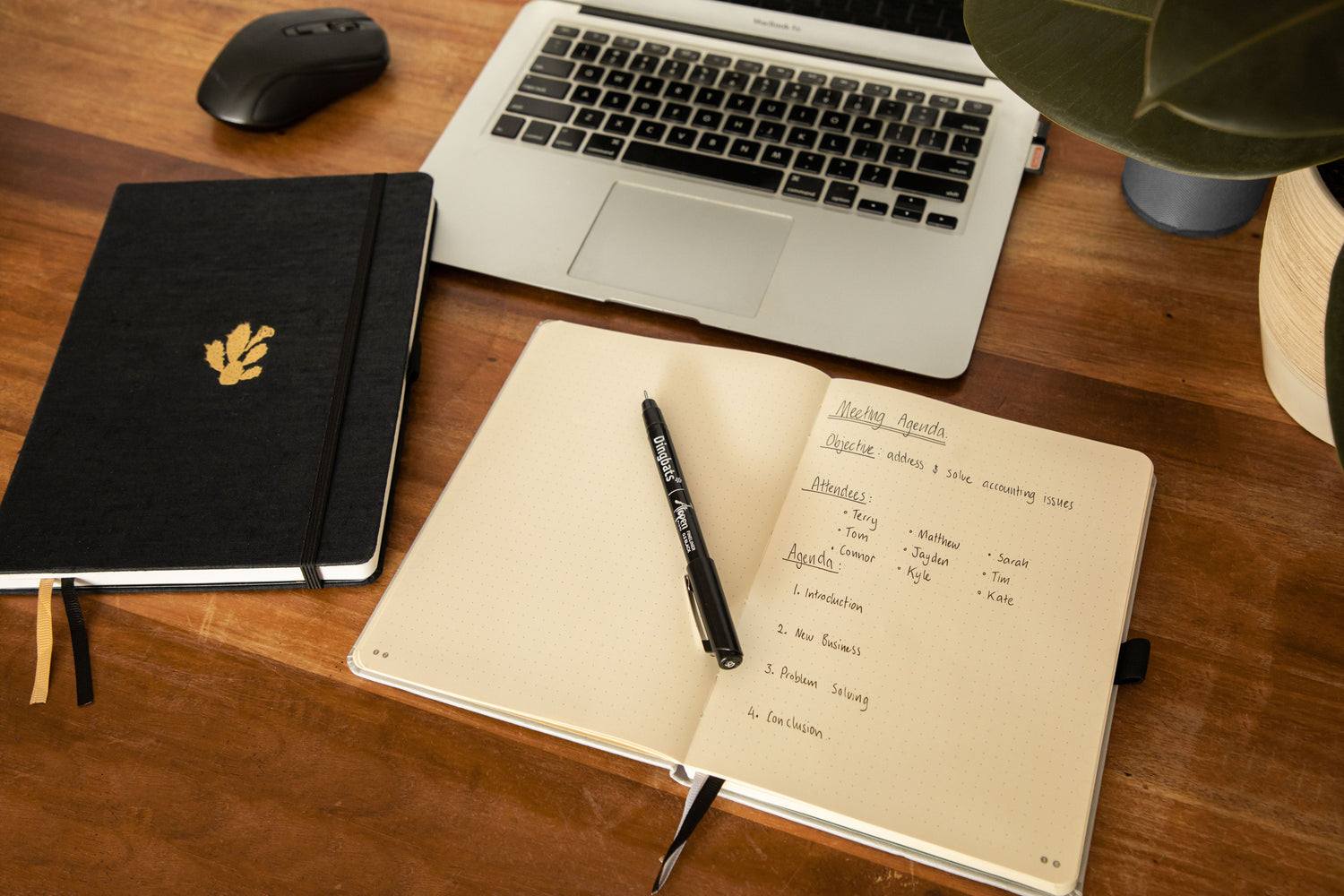
A notebook gives procrastination somewhere to land. It turns a foggy task into words on a page. It helps you empty your head, name the problem, break the work into smaller steps, choose one next action, and begin before the task becomes even heavier.
At Dingbats*, we believe a notebook is not only for polished plans and finished thoughts. It is also for messy starts. The Earth Collection is ideal for structured planning, task breakdowns, priorities, trackers, and follow-through. The Wildlife Collection is perfect for brain dumps, reflection, work notes, ideas, and clearing mental clutter. The Pro Collection helps creative thinkers map, sketch, and visualize projects that feel hard to begin.
Stopping procrastination is not about becoming perfectly disciplined. It is about making the next step clear enough to start.
Quick Overview: How to Stop Procrastinating with a Notebook
| Procrastination Problem | Notebook Method That Helps | Best Dingbats* Fit |
|---|---|---|
| Task feels too big | Break it into tiny steps | Earth Collection |
| Mind feels cluttered | Brain dump everything onto the page | Wildlife Collection |
| You do not know where to start | Choose one next action | Earth Collection |
| You keep avoiding the task | Write what makes it feel difficult | Wildlife Collection |
| You feel overwhelmed | Create a 5-minute start page | Earth or Wildlife Collection |
| Creative project feels stuck | Sketch, map, or outline the idea visually | Pro Collection |
| Too many priorities | Pick the top three | Earth Collection |
| You keep delaying decisions | Write the decision and possible options | Wildlife or Earth Collection |
The goal is not to plan forever. The goal is to use the page to make starting easier.
Why Procrastination Happens
Procrastination often happens when a task is unclear. You may write:
- Finish report
- Start project
- Clean inbox
- Plan launch
- Write blog
- Study chapter
- Organize finances
But these are not really tasks. They are outcomes. Your brain sees a large, undefined result and does not know what physical action to take first. So it delays. A task becomes easier to start when it is specific.
Instead of:
Finish report
Write:
Open report draft and write the introduction paragraph.
Instead of:
Plan launch
Write:
List the five assets needed for the launch.
Instead of:
Study chapter
Write:
Read pages 1–5 and write three key points.
The more specific the task, the easier it is to begin.
Why We Put Things Off
| Reason | What It Feels Like |
|---|---|
| Task is too vague | “I do not know where to start.” |
| Task is too big | “This will take forever.” |
| Task feels boring | “I will do it later.” |
| Task has too many decisions | “I need to think about it more.” |
| Task feels emotional | “I do not want to deal with this.” |
| Task feels difficult | “I might not do it well.” |
| There are too many tasks | “Everything is urgent.” |
A notebook helps because it turns those feelings into something you can work with.
Once the task is on paper, it becomes less invisible.
Why “Just Do It” Does Not Always Work
“Just do it” sounds simple, but it is not always useful. If the task is clear, small, and low-pressure, then yes, starting may be easy. But when a task feels complicated, emotional, or overwhelming, telling yourself to “just do it” can make you feel worse. It does not answer the real question:
Do what, exactly?
That is the question a notebook helps answer.
When you are procrastinating, do not begin by forcing yourself to complete the whole task.
Begin by writing.
Write what the task is.
Write why it feels hard.
Write what is unclear.
Write what the first tiny step could be.
Write what you can do in five minutes.
The page becomes a bridge between avoidance and action.

Step 1: Start with a Brain Dump
A brain dump is one of the simplest ways to stop procrastinating.
It clears the mental clutter that builds up when too many thoughts are competing for attention.
Open your notebook and write everything that is sitting in your head. Do not organize it yet. Do not judge it. Do not try to make it neat.
Just empty the noise.
Brain Dump Prompts
| Prompt | Notes |
|---|---|
| What am I avoiding? | |
| What tasks are sitting in my head? | |
| What feels urgent? | |
| What feels unclear? | |
| What keeps getting moved to tomorrow? | |
| What am I worried about? | |
| What is one thing I know I need to start? |
The Wildlife Collection is perfect for this because it gives you flexible writing space without forcing a structure too early.
A brain dump is not the final plan. It is the clearing stage. Once everything is on the page, you can see what you are actually dealing with.
Step 2: Separate Tasks from Feelings
Procrastination often mixes tasks and feelings together.
For example:
I need to finish this presentation, but I do not know if it is good enough, and I still need the images, and I am worried the team will not like it.
That is not one problem. It is several. A notebook can help you separate the practical task from the emotional weight around it.
Task vs Feeling Table
| What I Need to Do | What I Feel About It |
|---|---|
| Finish the presentation | Worried it will not be strong enough |
| Reply to the client | Unsure how to phrase the response |
| Start the report | Overwhelmed by the amount of information |
| Organize my notes | Annoyed that they are scattered |
| Study for the test | Nervous I will not remember enough |
This matters because feelings are real, but they are not always instructions.
You can feel overwhelmed and still take one small step. You can feel unsure and still draft a rough version. You can feel bored and still set a five-minute timer. Separating the task from the feeling makes the next action easier to choose.
Step 3: Turn Vague Tasks into Clear Tasks
A vague task creates resistance. A clear task creates movement. If your to-do list is full of large phrases, rewrite them into physical actions.
Vague Task vs Clear Task
| Vague Task | Clear First Step |
|---|---|
| Work on project | Open the project file and list missing pieces |
| Clean room | Put clothes into one pile |
| Write article | Draft the first heading and opening sentence |
| Study | Read five pages and write three notes |
| Plan campaign | List the channels and deadlines |
| Sort paperwork | Create three piles: keep, scan, discard |
| Reply to emails | Answer the easiest email first |
| Organize notebook | Add dates and mark important pages |
The clear version is easier because it tells you exactly what to do next.
The Earth Collection works especially well for this because it supports structured lists, trackers, priorities, and task breakdowns.

Step 4: Use the 5-Minute Start Page
One of the best ways to stop procrastinating is to make the beginning very small.
Not “finish the task.”
Not “work for three hours.”
Not “complete the whole project.”
Just five minutes. A 5-minute start page helps you lower the pressure enough to begin.
5-Minute Start Page
| Question | Answer |
|---|---|
| What task am I avoiding? | |
| Why does it feel hard? | |
| What is the smallest possible first step? | |
| What can I do in five minutes? | |
| What will count as starting? |
Examples:
| Task | 5-Minute Start |
|---|---|
| Write a blog post | Write five possible titles |
| Clean desk | Clear only the left side |
| Study chapter | Read the first two pages |
| Plan project | List all known deadlines |
| Reply to email | Write a rough draft, not final |
| Start workout plan | Put on shoes and write today’s session |
Starting is often the hardest part. Once you begin, the task usually feels less impossible.
Step 5: Break the Task into Tiny Steps
Big tasks create avoidance because they hide too many smaller tasks inside them. A notebook helps you unpack the task. Instead of writing one huge task, break it into steps so small they feel almost too easy.
Task Breakdown Example
Big task:
Write blog post
Tiny steps:
| Step | Task |
|---|---|
| 1 | Choose topic |
| 2 | Write title |
| 3 | List SEO keywords |
| 4 | Create section headings |
| 5 | Write introduction |
| 6 | Draft first section |
| 7 | Add tables or examples |
| 8 | Write FAQ |
| 9 | Edit intro and conclusion |
| 10 | Add meta description |
The task is the same, but it feels different. You are no longer facing one large, undefined block. You are facing a sequence of smaller actions. The page gives the task shape.
Step 6: Choose One Next Action
A next action is the very next thing you can physically do. Not the whole project. Not the final result. Not the ideal version. Just the next move.
Next Action Examples
| Goal | Next Action |
|---|---|
| Finish assignment | Open document and write the title |
| Organize room | Pick up items from the floor for five minutes |
| Start business plan | Write the first three questions |
| Plan trip | List possible travel dates |
| Study for exam | Review one page of notes |
| Write email | Add recipient and subject line |
| Start creative project | Sketch three rough ideas |
| Prepare meeting | Write the meeting purpose |
When procrastination appears, ask:
What is the next visible action?
If the answer still feels too big, make it smaller.
The “Ugly First Draft” Method
Perfectionism is one of the most common forms of procrastination. You delay starting because you want the first version to be good. But most good work does not begin good. It begins rough.
A notebook is a perfect place for an ugly first draft because it does not need to be shared, polished, or perfect.
Use your notebook to write the messy version first.
Ugly First Draft Prompts
| Prompt | Notes |
|---|---|
| If this did not need to be good, what would I write first? | |
| What is the rough version of this idea? | |
| What am I trying to say? | |
| What are the main points, even if they are messy? | |
| What would I write if no one saw this page? |
This is especially useful for writing, planning, creative work, presentations, emails, and difficult conversations.
The first version does not need to be impressive. It only needs to exist.

The Procrastination Decision Page
Sometimes procrastination happens because a task has too many decisions inside it. You are not avoiding the work itself. You are avoiding deciding. A decision page helps you make the options visible.
Decision Page Template
| Decision I Need to Make | Options | Best Next Step |
|---|---|---|
Example:
| Decision I Need to Make | Options | Best Next Step |
|---|---|---|
| Which campaign angle should we use? | Gift-led, lifestyle-led, product-led | Choose two and draft subject lines |
| Which task should I start first? | Email, report, meeting prep | Start with meeting prep because deadline is today |
| How should I organize notes? | By date, project, topic | Use project sections |
Once the decision is on paper, it usually feels less tangled. You can see the options instead of carrying them all in your head.
The “One Page Only” Rule
When a task feels overwhelming, limit yourself to one page.
One page for the plan. One page for the outline. One page for the brain dump. One page for the first draft. One page for the next steps.
This prevents planning from becoming another form of procrastination.
One Page Method
| Section | What to Write |
|---|---|
| Task | What needs to be done |
| Why it matters | Why it is worth doing |
| Stuck point | What is making it hard |
| Next three steps | Small actions |
| First 5 minutes | Where to begin |
The rule is simple:
Do not create a perfect system before starting. Use one page to create movement.
How to Stop Procrastinating at Work
Work procrastination often happens because tasks arrive from too many places: meetings, emails, calls, messages, deadlines, and quick requests.
A notebook can help you bring everything into one place.
Work Procrastination Page
| Section | Notes |
|---|---|
| Tasks I am avoiding | |
| Why I am avoiding them | |
| What is actually urgent | |
| What can wait | |
| Who needs a response | |
| What is the next action |
The goal is not to do everything immediately. The goal is to stop everything from feeling equally important.
The Earth Collection is useful for work procrastination because it supports priorities, task lists, follow-ups, and structured planning.
The Wildlife Collection is useful if you need to clear your mind before organizing the work.
How to Stop Procrastinating on Creative Projects
Creative procrastination can feel different.
Sometimes you are not avoiding the work because you are lazy. You are avoiding the blank page because the idea matters, and you are worried the result will not match what you imagined.
For creative projects, use the notebook to make the first version low-pressure.
Creative Start Page
| Prompt | Notes |
|---|---|
| What is the idea? | |
| What do I like about it? | |
| What is the roughest version I can make? | |
| What are three possible directions? | |
| What reference, sketch, or phrase can I start with? |
The Pro Collection is ideal for this because creative work often needs more than words. Sketches, arrows, diagrams, moodboards, layouts, brush pens, markers, and visual notes can all help an idea begin.
Do not ask the first version to be final. Ask it to exist.

How to Stop Procrastinating on Studying
Studying is easy to delay because “study” is too vague. Instead, define the exact study action.
Study Procrastination Examples
| Vague Study Task | Clear Study Action |
|---|---|
| Study biology | Read pages 20–25 and write five key terms |
| Revise notes | Summarize one lecture in ten bullet points |
| Prepare for exam | Create a list of weak topics |
| Review chapter | Write three questions from the chapter |
| Practice math | Complete five problems |
| Read textbook | Read for 15 minutes and mark confusing sections |
The Earth Collection works well for study planning because it helps with structure, revision checklists, trackers, and topic breakdowns.
A study session becomes easier when it has a clear beginning and ending.
The Top Three Method
When your to-do list is too long, everything starts competing for attention. A long list can make you procrastinate because it offers too many possible starting points. Choose three. Not because only three things matter, but because three gives your brain a clear focus.
Top Three Page
| Today’s Top Three | Next Action |
|---|---|
| 1. | |
| 2. | |
| 3. |
Choose tasks based on:
- urgency
- importance
- deadline
- energy needed
- what will reduce the most stress
- what will make tomorrow easier
Once the top three are chosen, start with the smallest first action.
The Anti-Procrastination Checklist
Use this page when you feel stuck.
Before You Avoid the Task, Ask:
| Question | Answer |
|---|---|
| Is the task too vague? | |
| Can I make it smaller? | |
| What is the first physical action? | |
| Can I do five minutes? | |
| What am I worried about? | |
| Do I need information, time, or a decision? | |
| What would starting badly look like? | |
| What will happen if I move it again? |
This checklist helps you interrupt the automatic habit of delaying. It turns procrastination into a question you can answer.
Procrastination Prompts
Use these prompts in your notebook when you know you are avoiding something but do not know why.
| Prompt | What It Helps With |
|---|---|
| The task I keep avoiding is… | Naming the task |
| I think I am avoiding it because… | Finding the reason |
| The part that feels hardest is… | Identifying friction |
| The smallest version of this task is… | Reducing pressure |
| If I only had five minutes, I would… | Starting |
| One thing I can do badly first is… | Reducing perfectionism |
| The next visible action is… | Creating movement |
| I will know I have started when… | Defining progress |
| The task does not need to be perfect because… | Softening pressure |
| After I start, I will feel… | Building motivation |
Writing honestly is more useful than writing perfectly. The page is not judging you. It is helping you begin.
A Simple 7-Day Anti-Procrastination Notebook Plan
Try this for one week.
| Day | Notebook Exercise |
|---|---|
| Day 1 | Brain dump every task sitting in your head |
| Day 2 | Choose one avoided task and write why it feels hard |
| Day 3 | Break one big task into ten tiny steps |
| Day 4 | Use the 5-minute start page |
| Day 5 | Create a top three priority list |
| Day 6 | Write an ugly first draft of something |
| Day 7 | Review what helped you start |
The goal is not to become perfectly productive in seven days. The goal is to learn what helps you begin.
Frequently Asked Questions
How do I stop procrastinating?
Start by making the task clearer and smaller. Write down what you are avoiding, why it feels difficult, and the smallest possible next action. Then commit to starting for five minutes.
Why do I procrastinate even when I want to do something?
You may be procrastinating because the task feels vague, overwhelming, boring, difficult, emotional, or too full of decisions. Wanting to do something does not always make the first step clear.
How can a notebook help with procrastination?
A notebook helps you brain dump, break tasks into smaller steps, choose priorities, separate feelings from actions, create a next step, and reduce mental clutter.
What is the best notebook method for procrastination?
The simplest method is: brain dump everything, choose one task, break it into tiny steps, pick one next action, and start for five minutes.
How do I stop procrastinating at work?
Write down the tasks you are avoiding, identify what is urgent, choose the top three priorities, and turn each vague task into a specific next action with a clear owner or deadline.
What is the 5-minute rule for procrastination?
The 5-minute rule means committing to work on a task for only five minutes. The goal is not to finish the task. The goal is to make starting feel easier.
Which Dingbats* notebook is best for productivity?
The Earth Collection is best for structured productivity, priorities, task breakdowns, trackers, and planning. The Wildlife Collection is best for brain dumps, reflection, and flexible notes. The Pro Collection is best for creative projects and visual planning.
Our Verdict
Procrastination is not always a discipline problem. Often, it is a clarity problem: the task is too vague. The next step is hidden. The pressure feels too high. The page is still blank. The project has too many moving parts. The first version feels too important. Dingbats* notebooks are made for that moment between thinking and doing.


Leave a comment
This site is protected by hCaptcha and the hCaptcha Privacy Policy and Terms of Service apply.