

Last updated: October 2026 | A guide to notebook layouts, page structure, journaling pages, planning pages, creative notes, and Dingbats* notebooks
A good notebook page does not need to be beautiful.
It does not need perfect handwriting.
It does not need matching colors.
It does not need a complicated system.
It does not need to look like something made for a photo.
A good notebook page works.
It helps you understand what you wrote.
It makes information easier to return to.
It gives your thoughts enough space to move.
It separates what matters from what is just passing through.
It lets lists, notes, sketches, dates, ideas, and reminders live together without becoming impossible to read later.
That is the anatomy of a good notebook page. It is not about decoration first. It is about structure. A title, date, margin, list, symbol, box, arrow, sketch, or empty space can change how useful a page feels. The way you arrange information affects how easily you can think, plan, remember, and return to it.
At Dingbats*, this matters because every collection supports a different kind of page. The Wildlife Collection is flexible for everyday notes, journaling, travel pages, reading reactions, and memory keeping. The Earth Collection is ideal for structured layouts, indexes, trackers, goals, routines, and planning systems. The Pro Collection, with 160gsm mixed media paper and a larger B5 format, gives more space for sketches, diagrams, moodboards, visual notes, brush pens, markers, and creative layouts.
A good notebook page is not a finished artwork. It is a working surface for thought.
Quick Overview: What Makes a Good Notebook Page?
| Page Element | Why It Matters |
|---|---|
| Date | Gives the page time context |
| Title | Makes the page easier to understand later |
| Sections | Prevents ideas from blending together |
| Margins | Creates space for reactions, symbols, and follow-ups |
| Lists | Turns thoughts into visible steps |
| Empty space | Gives the page breathing room |
| Symbols | Makes important notes easier to scan |
| Boxes | Highlights decisions, quotes, or key ideas |
| Arrows | Shows connection, movement, or sequence |
| Review notes | Helps you return to what matters |
A good notebook page helps future-you. That is the real test.
Why Page Structure Matters
A notebook page can hold anything, but without structure, everything can start to blur.
A meeting note becomes mixed with a task.
A journal entry hides an important idea.
A project decision gets lost between random thoughts.
A quote is written down but never found again.
A sketch has no label.
A plan has no next step.
Structure does not need to be strict. It only needs to give the page enough shape to be useful.
What Structure Helps With
| Without Structure | With Structure |
|---|---|
| Notes become hard to scan | Important parts stand out |
| Ideas get buried | Ideas are easier to return to |
| Tasks disappear | Actions become visible |
| Pages feel overwhelming | Pages feel manageable |
| Everything has equal weight | Key information has priority |
| You forget why you wrote something | Context is preserved |
A structured page does not have to look rigid. It simply needs to guide your eye.
Start With the Date
A date may seem small, but it is one of the most useful things you can add to a notebook page.
Dates create context. They show when an idea appeared, when a decision was made, when a routine started, when a trip happened, when a meeting took place, or when a thought belonged to a certain season. Without a date, old pages can become floating information. With a date, they become part of a timeline.
Why Dates Matter
| Page Type | Why the Date Helps |
|---|---|
| Journal entry | Shows when the feeling or memory happened |
| Meeting note | Records when decisions were made |
| Project page | Tracks development over time |
| Travel note | Places a memory in context |
| Reading note | Shows when you read or reacted |
| Habit tracker | Measures consistency |
| Sketch page | Shows creative progress |
| Goal page | Captures what mattered at that time |
A date does not need to be large. It just needs to be there.

Give the Page a Title
A title tells the page what it is. It can be simple:
Meeting Notes
October Goals
Book Ideas
Travel Plan
Sketch Tests
Launch Timeline
Things to Revisit
Today’s Thoughts
Project Feedback
A title helps you understand the page quickly when you return to it weeks or months later.
Good Page Titles Are Usually
| Quality | Example |
|---|---|
| Specific | “Fuji Launch Ideas” instead of “Ideas” |
| Short | “October Plan” instead of a full sentence |
| Useful | “Questions for Designer” |
| Searchable | “Reading Notes: Book Title” |
| Honest | “Messy Thoughts Before Meeting” |
| Flexible | “Things to Revisit” |
A title is not just decoration. It is a label for memory.
Use Sections to Separate Thoughts
A notebook page often needs more than one kind of information.
A meeting page may need notes, questions, tasks, and decisions.
A planning page may need goals, deadlines, blockers, and next steps.
A journal page may need reflection, memory, and action.
A creative page may need sketches, references, and notes.
Sections keep these pieces from blending together.
Simple Section Ideas
| Section | Best For |
|---|---|
| Notes | General information |
| Questions | Things to ask, research, or clarify |
| Actions | Tasks and next steps |
| Ideas | Possibilities, concepts, future thoughts |
| Decisions | What was agreed or chosen |
| References | Sources, quotes, examples, inspiration |
| Reflection | What you think or feel about it |
| Review | What still matters later |
A page with sections is easier to scan because each kind of information has its own place.
Leave Space on Purpose
Empty space is not wasted space. It helps the page breathe. A page that is filled from edge to edge can feel dense and difficult to revisit. Empty space gives your eye a place to rest. It also gives you room to add follow-ups, arrows, corrections, symbols, and later thoughts.
Why Empty Space Helps
| Empty Space Allows | Why It Matters |
|---|---|
| Later additions | You can update the page |
| Better scanning | Important notes stand out |
| Less overwhelm | The page feels easier to read |
| Clear sections | Ideas do not crowd each other |
| Visual balance | The page feels calmer |
| Mistakes | You have room to adjust |
| Arrows and symbols | Connections can be added later |
A full page can be satisfying. But a useful page often needs room to keep working.
Use Margins as a Second Layer
Margins are powerful because they let you add a second layer of thought. The main page can hold the original note. The margin can hold your reaction.
A star.
A question mark.
A follow-up.
A small sketch.
A keyword.
A reminder.
A connection to another page.
A note that says “use this later.”
Margin Uses
| Margin Mark | Meaning |
|---|---|
| ★ | Important |
| ? | Question |
| → | Follow-up |
| ! | Insight |
| R | Reference |
| D | Decision |
| A | Action |
| L | Later |
| Page number | Connects to another page |
Margins make a notebook more useful because they let your thinking continue after the original note is written. They turn a page into a conversation with itself.

Create a Simple Symbol System
Symbols help you scan pages quickly.
You do not need many. In fact, too many symbols can make a notebook harder to use. A small set is usually better.
Simple Notebook Symbol Key
| Symbol | Meaning |
|---|---|
| □ | Task |
| ✓ | Done |
| → | Next step |
| ★ | Important |
| ? | Question |
| ! | Insight |
| ○ | Theme |
| ↺ | Review |
| ✦ | Idea |
| ⏳ | Later |
The best symbol system is one you can remember without checking a key every time. It should make note-taking faster, not slower.
Use Boxes for What Matters Most
A box tells your eye, “This matters.” You can use boxes for decisions, quotes, deadlines, reminders, summaries, or final thoughts.
What to Put in a Box
| Box Type | Use |
|---|---|
| Decision box | What was agreed |
| Quote box | A line worth remembering |
| Summary box | The key takeaway |
| Deadline box | Date or time-sensitive note |
| Idea box | Strong concept |
| Warning box | Risk or issue |
| Follow-up box | What happens next |
Boxes are especially useful in work notebooks, project notes, meeting notes, reading notes, and creative research pages. A box creates importance without needing color or decoration.
Use Arrows to Show Movement
Thoughts are rarely static.
One idea leads to another.
One task depends on another.
One problem causes another.
One decision creates a next step.
Arrows help show that movement.
Ways to Use Arrows
| Arrow Use | Example |
|---|---|
| Cause and effect | Problem → Result |
| Sequence | Step 1 → Step 2 → Step 3 |
| Connection | Quote → Theme |
| Next action | Idea → Task |
| Revision | Old version → New version |
| Priority | Main goal → First step |
| Flow | Research → Draft → Review |
Arrows make a page feel more like thinking and less like storage. They show how ideas relate.
Use Lists When Your Brain Feels Full
Lists are one of the simplest ways to make thoughts manageable. When everything feels mixed together, a list gives each item its own line. This makes it easier to decide, act, reorder, cross out, or continue later.
Lists Work Well For
| List Type | Example |
|---|---|
| Task list | What needs to be done |
| Idea list | Possible concepts or titles |
| Packing list | What to bring |
| Reading list | Books to read or review |
| Question list | Things to ask or research |
| Decision list | Choices to make |
| Gratitude list | Small things worth noticing |
| Project list | Active and future work |
A list does not solve everything. But it makes everything visible. That is often the first step.
Use Tables When You Need Comparison
Tables are useful when information needs to be compared. They help you see differences, options, pros and cons, timelines, features, priorities, or results.
When to Use a Table
| Use a Table For | Example |
|---|---|
| Comparing options | Option A vs Option B |
| Tracking habits | Date, habit, result |
| Reviewing books | Title, rating, notes |
| Planning content | Topic, date, status |
| Project management | Task, owner, deadline |
| Product ideas | Feature, benefit, concern |
| Travel planning | Place, date, booking |
| Creative tests | Tool, result, notes |
A table can turn scattered notes into a system.

Use Sketches When Words Are Not Enough
Some ideas need a drawing. Not a perfect drawing. A simple sketch.
A box layout.
A quick object.
A map.
A shape.
A diagram.
A visual relationship.
A page composition.
A product idea.
A moodboard.
Sketches help when words become too slow or too abstract.
Sketches Are Useful For
| Sketch Type | Use |
|---|---|
| Layout sketch | Page, design, website, image, display |
| Object sketch | Product, packaging, tool, object |
| Map sketch | Travel, route, space, event |
| Diagram | Process, system, relationship |
| Mood sketch | Feeling, atmosphere, visual direction |
| Icon sketch | Symbol, label, quick reminder |
| Scene sketch | Memory, place, observation |
A good sketch does not need to look realistic. It only needs to help the idea make sense.

Use Headings to Create Hierarchy
Hierarchy means showing what matters most. Without hierarchy, every line looks equally important. That makes a page harder to scan. Headings solve this. A heading can be large, boxed, underlined, centered, written in caps, or placed at the top of a section.
Simple Heading Styles
| Heading Style | Best For |
|---|---|
| ALL CAPS | Clear section titles |
| Boxed heading | Important page sections |
| Underlined heading | Simple organization |
| Small banner | Main page title |
| Numbered heading | Step-by-step notes |
| Side heading | Margins or categories |
| Highlighted heading | Review pages or key ideas |
Headings do not need to be decorative. They need to make the page easier to understand.
Use Page Numbers and Indexes
If you want to find important pages later, page numbers and indexes matter (which are already available in the Earth Collection).
This is especially useful for notebooks that hold projects, planning, research, meeting notes, or long-term ideas. An index turns a notebook into something you can search manually.
What to Add to an Index
| Page | Topic |
|---|---|
| 4 | October goals |
| 8 | Fuji launch ideas |
| 13 | Meeting notes |
| 18 | Reading list |
| 25 | Campaign feedback |
| 31 | Travel plan |
| 42 | Sketch tests |
An index helps future-you find what current-you thought was worth keeping.

The Anatomy of a Good Journal Page
A journal page does not need to be organized like a planner, but it still benefits from gentle structure.
Journal Page Layout
| Page Element | Purpose |
|---|---|
| Date | Places the entry in time |
| Location or mood | Adds context |
| Opening line | Starts the reflection |
| Main thoughts | What you want to express |
| Small detail | A memory from the day |
| Question | Something you are still thinking about |
| Closing line | A takeaway, feeling, or next thought |
The Anatomy of a Good Planning Page
A planning page should help you move from intention to action. It should make priorities clear and next steps visible.
Planning Page Layout
| Page Element | Purpose |
|---|---|
| Date or period | Day, week, month, or project phase |
| Main focus | What matters most |
| Task list | What needs to be done |
| Priority section | Top three actions |
| Time notes | Deadlines, events, appointments |
| Blockers | What might get in the way |
| Review | What moved forward |
Planning pages work best when they are simple enough to use repeatedly. The perfect system is useless if it is too heavy to maintain.
The Anatomy of a Good Meeting Page
A good meeting page should make it easy to find what was discussed, what was decided, and what needs to happen next.
Meeting Page Layout
| Page Element | Purpose |
|---|---|
| Date | When the meeting happened |
| Topic | What the meeting was about |
| People | Who was involved |
| Notes | Important discussion points |
| Decisions | What was agreed |
| Questions | What is still unclear |
| Actions | What needs to happen |
| Owner and deadline | Who is responsible and when |
This layout turns meeting notes from a transcript into a useful record. The goal is not to write every word. The goal is to capture what matters after the meeting ends.
The Anatomy of a Good Creative Page
A creative page needs more flexibility. It may include words, sketches, references, scraps, colors, titles, arrows, and rough ideas.
Creative Page Layout
| Page Element | Purpose |
|---|---|
| Page title | Defines the creative direction |
| Reference note | What inspired the page |
| Sketch area | Visual exploration |
| Word bank | Titles, phrases, mood words |
| Color or tool test | Visual direction |
| Questions | What needs to be explored |
| Next idea | What to try after this |
Creative pages do not need to be tidy. They need room to evolve.

The Anatomy of a Good Reading Notes Page
A reading notes page should help you remember not only what the book said, but what you thought about it.
Reading Notes Page Layout
| Page Element | Purpose |
|---|---|
| Book title and author | Identifies the source |
| Date started or finished | Gives reading context |
| Favorite quote | Saves important language |
| Main idea | Captures the core takeaway |
| Personal reaction | Records what it made you think |
| Question | Keeps curiosity alive |
| Rating or review | Summarizes your response |
A good reading notes page is not only about the book. It is about your relationship with the book at the time you read it.
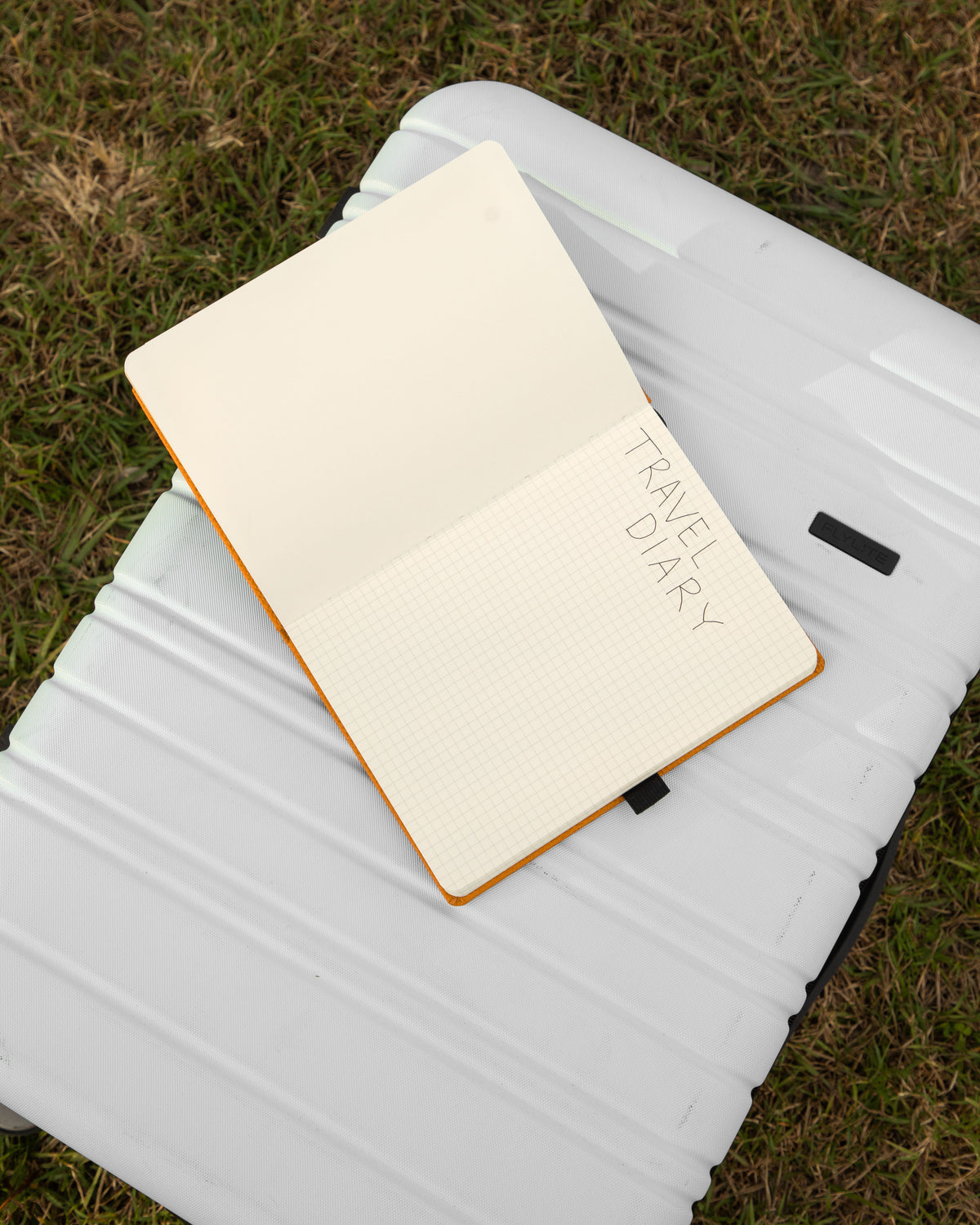
The Anatomy of a Good Travel Page
A travel page should capture movement, place, and small details you may forget later.
Travel Page Layout
| Page Element | Purpose |
|---|---|
| Date and place | Anchors the memory |
| Route or mini map | Shows movement |
| Weather | Adds atmosphere |
| Favorite detail | Captures something specific |
| Ticket or receipt space | Holds physical memory |
| Food or place note | Preserves sensory memory |
| Reflection | What the place made you think |
A travel page does not need to record everything. It only needs to record what makes the place come back.
The Anatomy of a Good Project Page
A project page should help you understand what the project is, where it stands, and what happens next.
Project Page Layout
| Page Element | Purpose |
|---|---|
| Project name | Identifies the work |
| Goal | Defines success |
| Background | Why the project matters |
| Ideas | Possible directions |
| Tasks | What needs to happen |
| Decisions | What has been chosen |
| Timeline | Key dates or phases |
| Next step | What moves the project forward |
Project pages work best when they combine thinking and action. A project is not only a task list. It is a developing idea.
How to Make Any Page Easier to Revisit
The real test of a notebook page is whether you can return to it. A page may make sense when you write it, but will it make sense later?
Make Pages Easier to Revisit By Adding
| Element | Why It Helps |
|---|---|
| Date | Time context |
| Title | Topic context |
| Labels | Explains sketches, scraps, and references |
| Symbols | Makes scanning faster |
| Summary line | Captures the takeaway |
| Next step | Shows what to do with the page |
| Page number | Helps indexing |
| Review mark | Flags pages worth returning to |
A notebook page should not only serve the moment. It should help you later.
Common Notebook Page Mistakes
A notebook page does not have to be perfect, but some habits make pages harder to use.
Mistakes to Avoid
| Mistake | Better Approach |
|---|---|
| No date | Add even a small date |
| No title | Label the page simply |
| Too much crowding | Leave space |
| No separation between ideas | Use sections or headings |
| Tasks hidden in notes | Mark them with a symbol |
| Sketches with no label | Add a short caption |
| Important notes not highlighted | Box, star, or underline them |
| No next step | Add one action if needed |
| Never reviewing | Return to important pages later |
A messy page can still be useful. A page with no context is harder to save.
The Wildlife Collection: Flexible Pages With Character
The Dingbats* Wildlife Collection works well for pages that are personal, flexible, and varied.
You can use the same notebook for journal entries, travel notes, daily lists, reading reactions, sketches, memories, and project fragments.
Best Wildlife Page Types
| Page Type | Why It Fits |
|---|---|
| Journal pages | Personal, reflective, warm |
| Travel notes | Flexible and memory-focused |
| Reading reactions | Quotes, thoughts, and reflections |
| Everyday lists | Practical but personal |
| Observation pages | Details from daily life |
| Memory pages | Scraps, captions, and small moments |
| Idea pages | Creative fragments and loose thoughts |
Wildlife pages do not need to be overly structured. They work best when they feel alive.

The Earth Collection: Structured Pages That Build Systems
The Dingbats* Earth Collection is ideal for pages that need structure and continuity.
Its planning-friendly features make it useful for indexes, trackers, routines, goals, future logs, reviews, and project systems.
Best Earth Page Types
| Page Type | Why It Fits |
|---|---|
| Index pages | Helps organize the notebook |
| Habit trackers | Makes routines visible |
| Goal pages | Tracks direction and progress |
| Monthly reviews | Captures reflection over time |
| Project maps | Organizes complex work |
| Planning pages | Turns ideas into action |
| Tables | Supports comparison and tracking |
Earth pages are for people who like the notebook to become a system. The page is not only a place to write. It is a way to organize life.
The Pro Collection: Spacious Pages for Visual Thinking
The Dingbats* Pro Collection is ideal for pages that need space, stronger paper, and visual freedom.
Its 160gsm mixed media paper and B5 size make it especially suitable for sketching, moodboards, diagrams, brush pens, markers, calligraphy, creative research, and visual notes.
Best Pro Page Types
| Page Type | Why It Fits |
|---|---|
| Sketch pages | Room for visual exploration |
| Moodboards | Space for scraps, colors, and references |
| Diagram pages | Helps map complex ideas |
| Creative research pages | Combines notes, visuals, and tests |
| Brush pen headings | Supports expressive lettering |
| Marker tests | Stronger paper supports more tools |
| Process pages | Shows development and experimentation |
Pro pages can do more than hold writing. They can hold creative movement.

A Simple Good Page Template
Use this when you want a page that works for almost anything.
Good Notebook Page Template
| Page Element | Your Notes |
|---|---|
| Date | |
| Title | |
| Main notes | |
| Key idea | |
| Question | |
| Action or next step | |
| Review mark |
This template is simple enough for work, journaling, planning, reading, and creative thinking. The best notebook systems are often the ones you can actually repeat.
A Page Review Template
Use this at the bottom of any important page.
Page Review
| Prompt | Your Notes |
|---|---|
| What matters most on this page? | |
| What needs action? | |
| What should I return to? | |
| What page does this connect to? | |
| Is this finished, active, or for later? |
This turns a page from a place where information sits into a place where thinking continues.
Frequently Asked Questions
What makes a good notebook page?
A good notebook page is clear, useful, and easy to return to. It usually includes a date, title, enough spacing, sections, symbols, and a clear purpose.
How should I organize a notebook page?
Start with a date and title, then divide the page into sections. Use lists, boxes, arrows, margins, symbols, and empty space to make the page easier to scan.
Do notebook pages need to look aesthetic?
No. A notebook page does not need to look aesthetic to be useful. Clear structure matters more than decoration.
What should every notebook page include?
Not every page needs the same elements, but a date, title, and clear purpose are helpful. Important pages may also need symbols, sections, summaries, and next steps.
How do I make my notebook easier to review?
Use dates, titles, page numbers, indexes, symbols, boxed summaries, and review marks. These help you find and understand pages later.


Leave a comment
This site is protected by hCaptcha and the hCaptcha Privacy Policy and Terms of Service apply.