
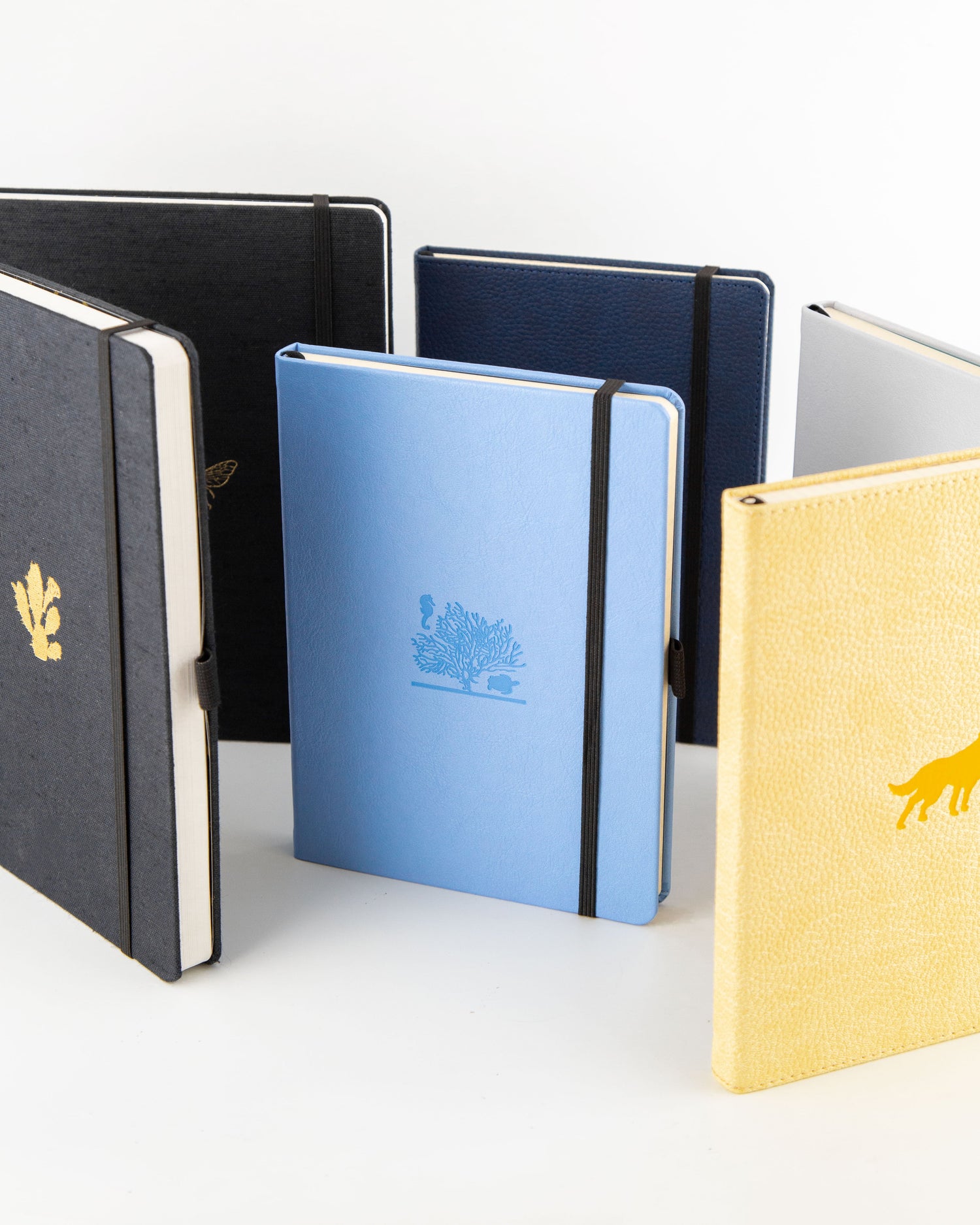
Last updated: June 2026 | A guide to the paper, materials, structure, and design details that make a notebook feel good to use — and worth returning to
Some notebooks are used for a week.
Others stay with you for years.
The difference is not always obvious at first. A notebook can look beautiful on a shelf, feel promising when it is new, and still fail once it becomes part of daily life. The pages may bleed through. The cover may not age well. The binding may make it uncomfortable to write near the spine. The format may not match how you think. The design may look good, but not actually help you use it.
A notebook worth keeping is different.
It is the one you return to. The one that feels good in your hand. The one that opens when you need it. The one that handles your pen properly. The one that fits your routine, your work, your ideas, your plans, your sketches, your notes, or your memories. The one that becomes more personal the more it is used.
At Dingbats*, that belief sits at the center of the design process. A notebook is not just a blank product. It is a tool for thinking, writing, planning, creating, noticing, and keeping. That means the details matter: the paper, the cover, the ruling, the structure, the durability, the materials, and the values behind how it is made.
Dingbats* officially launched in 2016, but the brand’s paper heritage goes much further back. As part of SKB, a long-established paper goods company in Lebanon, the Bekdache family has been trading and converting premium paper goods for five generations, since 1800. That history matters because notebooks are not only about design. They are about material knowledge.
A good notebook is not made by accident. It is designed to be used.
Quick Overview: What Makes a Notebook Worth Keeping?
| Design Detail | Why It Matters | Dingbats* Example |
|---|---|---|
| Paper quality | Affects smoothness, ink handling, bleed-through, and writing comfort | 100gsm fountain-pen-friendly paper in Wildlife and Earth; 160gsm mixed media paper in Pro |
| Cover material | Affects durability, feel, and everyday use | Tactile, vegan materials designed with sustainability in mind |
| Binding | Affects how comfortably the notebook opens and writes | Designed for real daily use |
| Ruling options | Helps the notebook match the way you think | The Dingbats* Wildlife collection offers lined, dotted, grid, and plain options |
| Structure | Helps organize plans, goals, and long-term use | The Dingbats* Earth collection includes planning-friendly features such as index, key, and future-log-style structure |
| Creative freedom | Supports sketching, visual thinking, and mixed media | The Dingbats* Pro collection uses 160gsm paper for creative work |
| Sustainability | Shows how carefully the notebook was made | FSC-approved sourcing, vegan materials, recyclable and degradable choices |
A notebook worth keeping is not defined by one detail. It is the combination of details that makes it feel reliable over time.
Why Notebook Quality Matters More Than People Think
A notebook is one of those products people often underestimate until it disappoints them.
You only notice poor paper when ink feathers, ghosts heavily, or bleeds through. You only notice weak binding when the notebook does not open comfortably. You only notice the wrong ruling when every page feels slightly frustrating. You only notice poor material choices when the cover wears badly or the notebook stops feeling good to use.
Quality matters because a notebook is a repeated-use object.
You do not use it once. You open it again and again. You carry it, write in it, leave it on your desk, take it in your bag, return to older pages, tear through drafts, make plans, change your mind, and keep going.
That is why a notebook should be judged not only by how it looks new, but by how it performs after weeks, months, and years of real use.
A high-quality notebook should make writing feel easier, not more difficult. It should support the way you think, not force you into a system that does not fit. It should be practical enough to use often and considered enough to keep.
Paper Heritage: Why Dingbats* Starts With Material Knowledge
Paper is not just a surface.nIt changes the entire experience of using a notebook.
The smoothness of the page, the thickness, the weight, the way ink sits on the surface, the way pages turn, and the way the notebook ages all affect how often someone returns to it.
For Dingbats*, paper is not an afterthought. The brand comes from a family tradition of working with paper goods for generations. That background shapes the way the notebooks are designed: not as disposable stationery, but as objects made to hold real writing, real planning, and real creative work.
This matters because the best notebook brands understand that paper quality is not only a technical specification. It is a feeling.
It is the difference between wanting to write another page and putting the notebook aside.

Paper Quality: The Detail You Notice First
The paper is usually the first detail people notice once they begin using a notebook.
It determines how the pen feels on the page. It affects whether ink bleeds through. It changes whether a notebook works for everyday writing, bullet journaling, sketching, fountain pens, markers, or mixed media.
A good notebook should not make you think too much about the paper. It should simply let you write.
Dingbats* uses different paper weights across its collections because different users need different things.
Dingbats* Paper by Collection
| Collection | Paper | Best For |
| Wildlife Collection | 100gsm fountain-pen-friendly paper | Everyday writing, journaling, notes, lists, reflections, field notes |
| Earth Collection | 100gsm fountain-pen-friendly paper | Planning, bullet journaling, trackers, structured notes, goal pages |
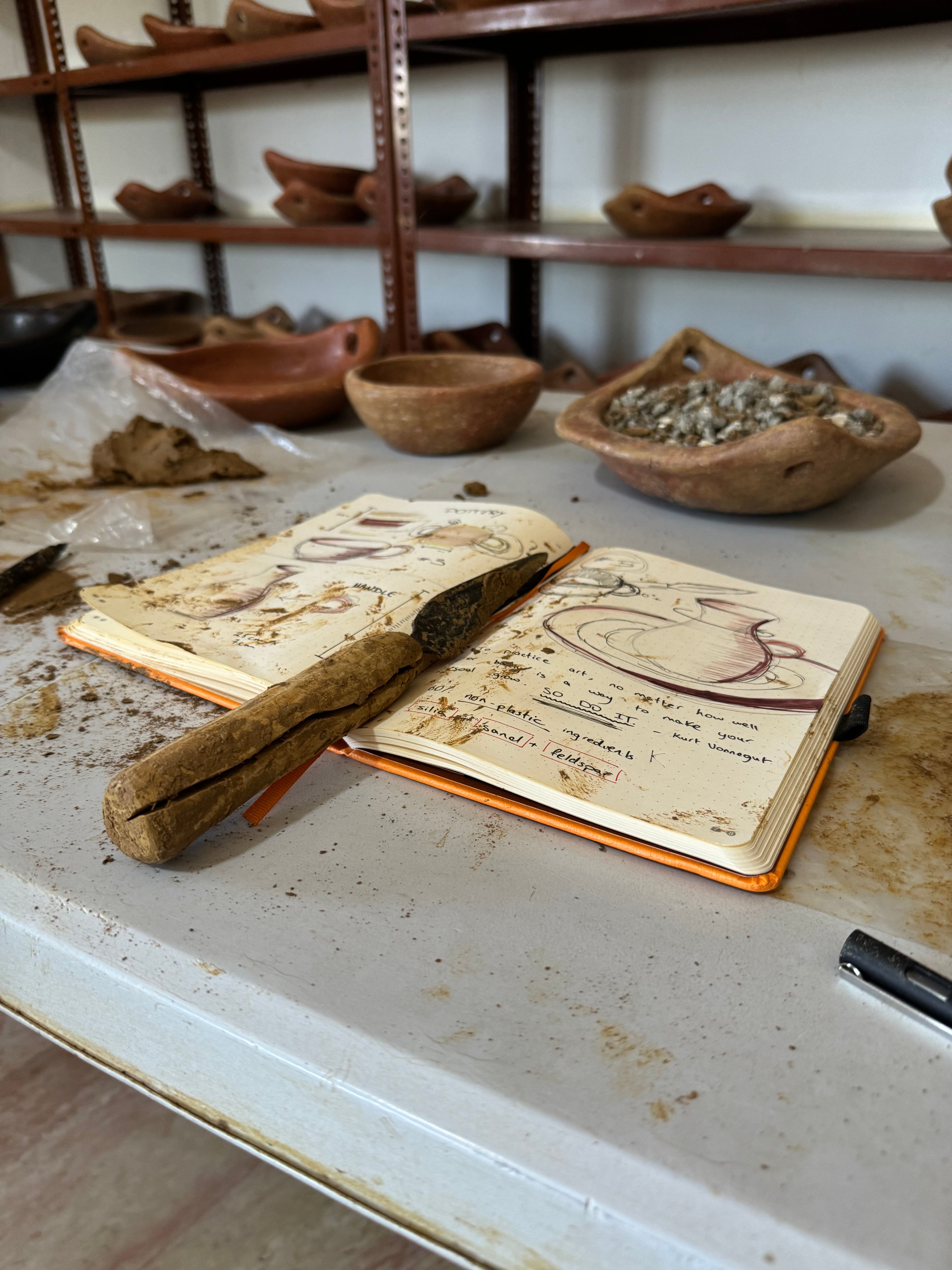
| Pro Collection | 160gsm mixed media paper | Sketching, collage, lettering, visual thinking, light washes, creative work |
The key is that thicker does not always mean better for everyone.
A 100gsm notebook can be ideal for daily writing because it balances smoothness, quality, and usability. A 160gsm notebook is better for creative users who want more support for visual work, layering, and mixed media.
That is why Dingbats* does not treat every notebook as the same object. The paper changes depending on the purpose of the collection.
100gsm vs 160gsm: Which Notebook Paper Do You Need?
Choosing notebook paper should start with how you plan to use the notebook.
If you mainly write, take notes, journal, plan, or use fountain pens, 100gsm paper is often the right balance. It feels substantial without making the notebook unnecessarily heavy. It supports everyday writing while keeping the notebook practical.
If you sketch, collage, use brush pens, add color, test layouts, or create visual pages, 160gsm paper gives you more room to experiment.
How to Choose Paper Weight
| If You Use Your Notebook For… | Choose |
| Daily notes | Wildlife Collection |
| Journaling | Wildlife Collection |
| Bullet journaling | Earth Collection |
| Weekly planning | Earth Collection |
| Goal tracking | Earth Collection |
| Fountain pens | Wildlife or Earth Collection |
| Sketching | Pro Collection |
| Collage | Pro Collection |
| Mixed media | Pro Collection |
| Visual planning | Pro Collection |
This is what makes the collection structure important. Dingbats* does not simply offer different covers. Each collection supports a different kind of use.
Cover Material: Why Feel and Durability Matter
A notebook cover does more than protect the pages.
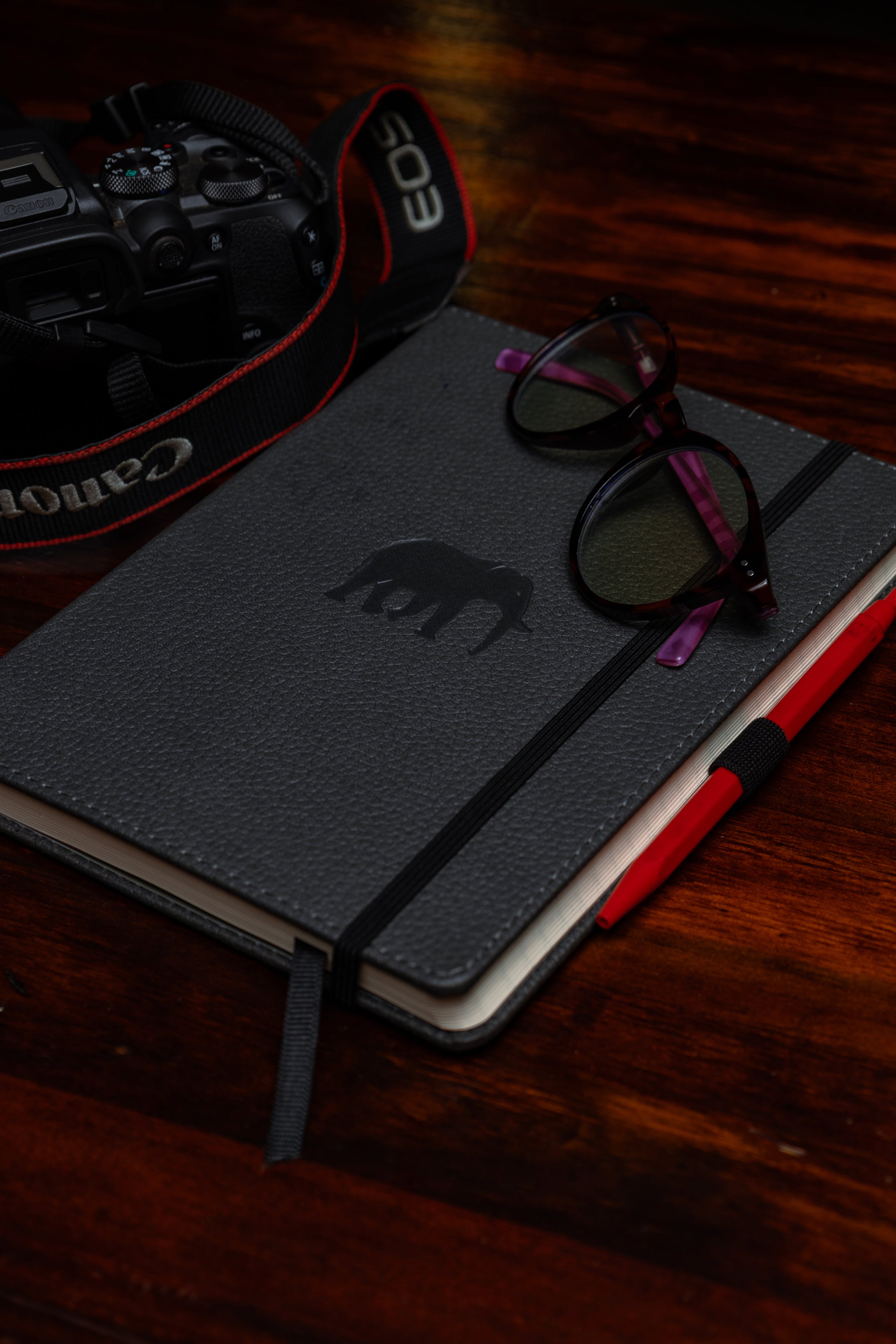
It changes the way the notebook feels in your hand. It affects whether you want to carry it. It influences how durable the notebook feels, how personal it becomes, and how it ages with use.
A cover should be strong enough for daily life, but pleasant enough to make the notebook feel inviting. It should feel like something made to be handled, opened, carried, and returned to.
Dingbats* places strong emphasis on vegan and eco-conscious materials. The brand’s Green commitment highlights non-toxic, fully degradable faux leather covers and paper sourced from trees that are replaced or allowed to regenerate naturally. Dingbats* is also EU V-Label certified, meaning the notebooks do not use animal-based adhesives and are 100% vegan.
That matters because cover material is not only a design choice. It is also an ethical one. A notebook worth keeping should feel good to use and good to choose.

Binding: The Detail You Notice When You Write
Binding is one of the most overlooked parts of notebook quality.
A notebook can have beautiful paper and a beautiful cover, but if it does not open comfortably, it becomes frustrating to use. Writing near the spine becomes awkward. Pages fight back. The notebook feels more like an object to preserve than a tool to use.
A good notebook should invite use.
It should open easily enough for writing, planning, sketching, and returning to older pages. It should feel reliable. It should not make the page harder to access.
This is especially important for people who use notebooks daily: students, writers, designers, professionals, entrepreneurs, journalers, planners, and creatives. If the binding gets in the way, the notebook slowly stops being useful.
A notebook worth keeping needs to work with your hand, not against it.
Ruling Options: Choosing How You Think
The ruling of a notebook can completely change how it feels to use.
Some people think best in lines. Others need dots. Some prefer grids. Some need a blank page because structure gets in the way.
That is why ruling options matter.
The Dingbats* Wildlife Collection offers different rulings, including lined, dotted, grid, and plain options, making it one of the most flexible Dingbats* collections for different writing styles.
Which Ruling Should You Choose?
| Ruling | Best For |
| Lined | Journaling, long-form writing, notes, reflections |
| Dotted | Bullet journaling, flexible layouts, lists, light structure |
| Grid | Diagrams, tables, technical notes, planning, layouts |
| Plain | Sketching, free writing, visual notes, open creative thinking |
The right ruling should match the way your mind naturally organizes information.
If a notebook feels hard to use, sometimes the problem is not the notebook itself. It may simply be the wrong format for the way you think.
Structure vs Freedom: Why Different Collections Exist
Not every notebook user needs the same thing.
Some people want freedom. Some want structure. Some want a creative surface. Some want a daily companion. Some want a planning system. Some want a sketchbook that can also hold ideas.
That is why Dingbats* has distinct collections.
Dingbats* Collection Guide
| Collection | Best For | Why It Works |
| Wildlife Collection | Everyday writing, notes, journaling, field notes, flexible use | Available in different designs, formats, sizes, and rulings |
| Earth Collection | Planning, bullet journaling, routines, trackers, goals | More structured features for organization and long-term use |
| Pro Collection | Sketching, visual thinking, collage, lettering, mixed media | 160gsm paper supports creative and visual work |
The Wildlife Collection is for people who want a notebook that adapts to them. It is especially strong for everyday notes, writing, reflection, and personal use because the different rulings and formats let users choose how they want the page to behave.
The Earth Collection is for people who want more structure. It works well for planning, productivity, bullet journaling, routines, and tracking because its features help organize ideas over time.
The Pro Collection is for people who need a more creative surface. It is designed for visual thinkers, artists, designers, and anyone who uses a notebook for more than writing.
A notebook worth keeping should fit your use case, not just your aesthetic.

Sustainability as a Design Choice
Sustainability should not feel like an extra label placed on a product at the end.
It should be part of how the product is designed from the beginning.
For Dingbats*, sustainability is built into the materials and sourcing decisions. The brand states that it is FSC approved, uses core materials that are biodegradable, vegan, and recyclable, and is committed to environmentally conscious choices across its notebooks.
Dingbats* also highlights that its notebooks are 100% vegan, EU V-Label certified, and made without animal-based adhesives. Its Green page notes that the faux leather covers are non-toxic and degradable under controlled composting conditions, while the paper is sourced from trees that are replaced or allowed to regenerate naturally.
This gives the notebook another layer of value. A notebook worth keeping should not only support your thoughts, plans, and ideas. It should also reflect a more considered way of making and choosing objects.
Why Longevity Is Part of Sustainability
One of the most sustainable things a notebook can do is last long enough to be fully used.
A poorly made notebook may be abandoned halfway through because the paper is frustrating, the cover wears badly, or the format does not fit the user. That creates waste, even if the notebook looked appealing at first.
A better notebook invites you to keep using it.
The pages feel good enough to write on. The format suits your life. The materials feel considered. The design details support real use. The notebook becomes part of your routine rather than another unused object.
Longevity is not only about physical durability.
It is about emotional durability too.
Do you still want to open it?
Does it still feel useful?
Does it still fit your life?
Does it become more personal with time?
A notebook worth keeping is one that earns its place.
How to Choose a Notebook That Lasts
The best notebook is not the same for everyone. The best notebook is the one that matches how you actually use paper.
Before choosing, ask:
| Question | Why It Matters |
| Will I mostly write, plan, or create? | Helps choose the right collection |
| Do I need structure or freedom? | Helps choose between Earth and Wildlife |
| Do I use fountain pens or heavier media? | Helps choose paper type |
| Do I prefer lined, dotted, grid, or plain pages? | Helps match the page to your thinking style |
| Will I carry it daily? | Helps choose size and cover type |
| Do I want a notebook for work, creativity, or personal life? | Helps define the use case |
| Do sustainability and vegan materials matter to me? | Helps choose a more considered product |
Simple Dingbats* Selection Guide
| Your Need | Best Dingbats* Choice |
| A flexible everyday notebook | Wildlife Collection |
| A structured planning notebook | Earth Collection |
| A creative mixed media notebook | Pro Collection |
| A fountain-pen-friendly notebook | Wildlife or Earth Collection |
| A notebook for bullet journaling | Earth Collection |
| A notebook for sketching and collage | Pro Collection |
| A notebook with different rulings and formats | Wildlife Collection |
| A notebook designed with sustainability in mind | All Dingbats* collections |
A good notebook should make the choice easier because the collection has a clear purpose.
What Makes a Notebook Feel Premium?
A premium notebook is not premium because it is expensive. It is premium because the experience feels considered.
The paper feels smooth and reliable. The cover feels tactile and durable. The ruling supports your use. The notebook opens comfortably. The design has a purpose. The materials are thoughtfully chosen. The object feels like it was made to be used, not only photographed.
Premium Notebook Checklist
| Detail | What to Look For |
| Paper | Smooth, substantial, suitable for your pens |
| Cover | Durable, tactile, comfortable to carry |
| Binding | Opens well and supports regular writing |
| Ruling | Matches your thinking style |
| Format | Fits your daily life |
| Sustainability | Responsible sourcing and materials |
| Purpose | Designed for how you actually use it |
A premium notebook should reduce friction.
It should make writing, planning, and creating feel natural.
Why a Notebook Becomes Worth Keeping
A notebook becomes worth keeping when it stops feeling like a product and starts feeling like part of your life.
It holds your handwriting, your plans, your crossed-out ideas, your sketches, your lists, your goals, your notes, and your memories. It becomes specific to a season, a project, a trip, a study year, a creative phase, or a version of yourself.
That is why the design details matter.
The better the paper, the more likely you are to write.
The better the structure, the more likely you are to organize.
The better the format, the more likely you are to use it.
The better the materials, the more likely you are to keep it.
The better the fit, the more likely it becomes yours.
Dingbats* notebooks are designed around that idea: a notebook should be used, kept, and returned to.

Frequently Asked Questions
What makes a notebook high quality?
A high-quality notebook usually has reliable paper, durable cover materials, comfortable binding, useful ruling options, thoughtful structure, and materials that are chosen with care. The best notebook should feel good to use regularly, not just look good when it is new.
What notebook paper is best for writing?
For everyday writing, journaling, notes, and fountain pens, 100gsm paper is a strong choice because it feels substantial while remaining practical. Dingbats* Wildlife and Earth notebooks use 100gsm fountain-pen-friendly paper.
What notebook paper is best for sketching or mixed media?
For sketching, collage, visual planning, brush pens, markers, and mixed media, heavier paper is usually better. The Dingbats* Pro Collection uses 160gsm mixed media paper for creative work.
Which Dingbats* notebook is best for everyday use?
The Wildlife Collection is best for flexible everyday use because it comes in different formats, sizes, rulings, and animal designs. It works well for notes, journaling, lists, reflections, and daily writing.
Which Dingbats* notebook is best for planning?
The Earth Collection is best for planning, bullet journaling, trackers, goals, routines, and structured notes because it includes planning-friendly features and supports long-term organization.
Which Dingbats* notebook is best for creative work?
The Pro Collection is best for creative work because its 160gsm mixed media paper supports sketching, collage, visual thinking, lettering, and layered pages.
Are Dingbats* notebooks vegan?
Yes. Dingbats* states that its notebooks are 100% vegan and EU V-Label certified, with no animal-based adhesives.
Are Dingbats* notebooks sustainable?
Dingbats* is FSC approved and uses considered materials across its notebooks, including vegan, recyclable, and degradable material choices. The brand also emphasizes responsible paper sourcing and environmentally conscious packaging.
Our Verdict
A notebook worth keeping is not just a notebook that looks good.
It is a notebook that works.
It works when you write.
It works when you plan.
It works when you sketch.
It works when you carry it.
It works when you return to it months later.
It works because the details were considered before the first page was ever used.
Dingbats* brings together paper heritage, thoughtful design, collection-specific functionality, and sustainability to create notebooks that are made for real life. The Wildlife Collection gives everyday writing and flexible thinking a home. The Earth Collection gives planning and structure a system. The Pro Collection gives creative process a stronger surface.
A notebook becomes worth keeping when it feels good to use, reflects what matters to you, and lasts long enough to become part of your story.
That is what good design should do.

Leave a comment
This site is protected by hCaptcha and the hCaptcha Privacy Policy and Terms of Service apply.