


Imagine diving beneath the surface of the ocean and discovering an entirely different world.
A sea turtle glides peacefully through the water.
Tiny, brightly colored fish weave between coral branches.
A giant clam rests on the ocean floor.
And everywhere you look, something is moving, growing, feeding, or hiding.
This is the Great Barrier Reef, one of the most extraordinary natural ecosystems on Earth.
Stretching along Australia's northeastern coast, it's a living world so vast and complex that scientists are still working to understand everything within it.
But what makes the Great Barrier Reef so special?
Why do millions of living organisms depend on it?
And why has protecting this remarkable ecosystem become such an important global challenge?
1. The Great Barrier Reef Isn't Actually One Reef
Here's something that surprises many people.
Despite its name, the Great Barrier Reef isn't one enormous, continuous coral reef.
It's a vast ecosystem made up of thousands of individual reefs, together with islands, coral cays, seagrass meadows, mangrove forests, and other marine habitats.
The Great Barrier Reef Marine Park stretches along approximately 2,300 kilometers of Australia's Queensland coast. It encompasses roughly 344,400 square kilometers. To put that into perspective, it's larger than many countries. And although coral reefs are its most recognizable feature, they cover only a relatively small part of the entire Marine Park.
Beyond the colorful coral formations lie vast areas of open water, underwater meadows, coastal habitats, and islands.
Each environment supports different forms of life.
Together, they create one of the most complex marine ecosystems on the planet.
It's a remarkable reminder that what we see on the surface is often only a small part of a much bigger story.
2. Coral Is an Animal, Not a Plant
If you've ever seen photographs of coral reefs, you might have assumed that the colorful structures resemble underwater plants.
But here's the fascinating part.
Corals are animals.
Most reef-building corals consist of colonies of tiny organisms called polyps.
Each polyp has a soft body and tentacles that help it capture food.
Many reef-building corals also live in partnership with microscopic algae that provide energy through photosynthesis.
In return, the coral provides the algae with a protected environment and access to nutrients.
It's a remarkable relationship that helps sustain coral reef ecosystems.
Over time, reef-building corals produce calcium carbonate skeletons that contribute to the structures we recognize as coral reefs.
These structures can grow over thousands of years, creating intricate underwater habitats.
What looks like a colorful rock formation is actually the result of countless tiny animals building on the work of previous generations.
It's one of nature's most extraordinary architectural achievements.
3. Thousands of Species Call the Reef Home
The Great Barrier Reef is famous for its astonishing biodiversity.
According to the Great Barrier Reef Marine Park Authority, the ecosystem supports more than 1,600 fish species and over 450 species of hard coral.
But the diversity doesn't stop there.
Sea turtles travel through its waters.
Reef sharks patrol its underwater landscapes.
Dugongs feed on seagrass meadows.
Giant clams, sea stars, sea cucumbers, mollusks, and countless invertebrates inhabit the reef.
Whales and dolphins also visit or live within the wider marine environment.
And every one of these animals plays a different role.
Some are predators.
Others graze on algae.
Some help recycle nutrients.
And many are part of food webs that connect the different habitats of the reef.
When you look closely, the Great Barrier Reef is less like a single underwater landscape and more like an entire collection of living communities.
Each one depends, in different ways, on the others.
The Inspiration Behind the Sky Blue Great Barrier Reef Notebook
Its distinctive blue cover reflects the ocean environment that surrounds this remarkable ecosystem.
Inside, the notebook features an infographic spread celebrating the destination behind its design.
Because at Dingbats*, we believe even everyday objects can remind us of the natural places that deserve our attention.
And few environments are more deserving of appreciation than the Great Barrier Reef.

4. The Reef Is Full of Incredible Partnerships
One of the most interesting things about coral reefs is how many species depend on one another. Take the relationship between clownfish and sea anemones.
Sea anemones have stinging tentacles that can protect them from predators and help capture food.
Yet clownfish have adaptations that allow them to live among these tentacles.
The fish gain shelter, while their presence can provide benefits to the anemones.
Or consider cleaner fish.
Certain fish species remove parasites and dead tissue from larger fish.
Their cleaning behavior can attract visiting animals, including species that would otherwise be potential predators.
These relationships are examples of how cooperation, adaptation, and specialization help shape underwater ecosystems.
And they reveal something important.
A coral reef isn't simply a collection of beautiful animals living alongside one another.
It's a network of interactions.
Understanding those connections helps scientists understand what makes reefs function and what happens when environmental conditions change.
5. Some Reef Fish Can Change Sex
The underwater world is filled with surprises. And one of the most remarkable involves certain reef fish. Some species can change sex during their lives. Clownfish, for example, have social groups in which the largest individual is typically the breeding female. If that female disappears, the breeding male can change sex and become female.
Other reef fish, including certain wrasses and parrotfish, can undergo sex changes in different directions depending on their species and social structure.
It's an extraordinary biological adaptation. And it's another example of why coral reef biodiversity is so fascinating.
The more scientists investigate these ecosystems, the more they discover about the incredible variety of ways animals survive, reproduce, and interact.
6. Why Do Corals Lose Their Color?
One of the greatest challenges facing the Great Barrier Reef is coral bleaching.
But what exactly does that mean?
Many reef-building corals depend on their relationship with microscopic algae living inside their tissues.
These algae provide much of the energy the coral needs and contribute to its appearance.
When corals experience environmental stress, particularly unusually high water temperatures, this relationship can break down.
The coral may expel the algae or lose the algae's pigments, exposing the white skeleton beneath its translucent tissues.
This process is known as coral bleaching.
A bleached coral isn't necessarily dead.
If conditions improve quickly enough, it may recover.
But prolonged or repeated stress can weaken corals and increase the risk of mortality.
The Great Barrier Reef has experienced several major bleaching events over recent years, making ocean warming one of its most significant long-term threats.
In 2026, the Australian Institute of Marine Science reported that average hard coral cover across the reef's three broad regions had increased slightly or remained relatively stable compared with 2025.
That was an encouraging sign of early recovery in some areas.
However, researchers emphasized that coral bleaching, tropical cyclones, crown-of-thorns starfish outbreaks, and other disturbances continue to threaten reef health.
The message is important.
Coral reefs can recover under suitable conditions, but their future depends heavily on reducing the pressures they face.
7. Why Protecting the Great Barrier Reef Matters
The Great Barrier Reef isn't important only because it's beautiful.
Its ecological significance extends far beyond its famous coral formations.
Coral reefs provide habitat for marine life.
Seagrass meadows support species such as dugongs and turtles.
Mangrove forests contribute to coastal ecosystems and provide important nursery habitats for fish.
The wider marine environment also supports tourism, scientific research, cultural traditions, and local economies.
The Great Barrier Reef is deeply connected to Aboriginal and Torres Strait Islander peoples, whose relationships with the region extend back thousands of years.
Protecting this ecosystem therefore involves biodiversity, cultural heritage, coastal communities, and the long-term health of the ocean.
Conservation efforts include reef monitoring, crown-of-thorns starfish control, habitat restoration, improving water quality, and responding to the impacts of climate change.
And while the challenges are significant, the reef remains home to an extraordinary diversity of living organisms.
Its future is worth caring about.
Bringing a Piece of the Ocean to Your Everyday
At Dingbats*, we've always believed nature has the power to inspire.
The Great Barrier Reef is a perfect example.
It's colorful, complex, and filled with extraordinary life.
And its story reminds us how important it is to appreciate the natural world beyond the places we see every day.
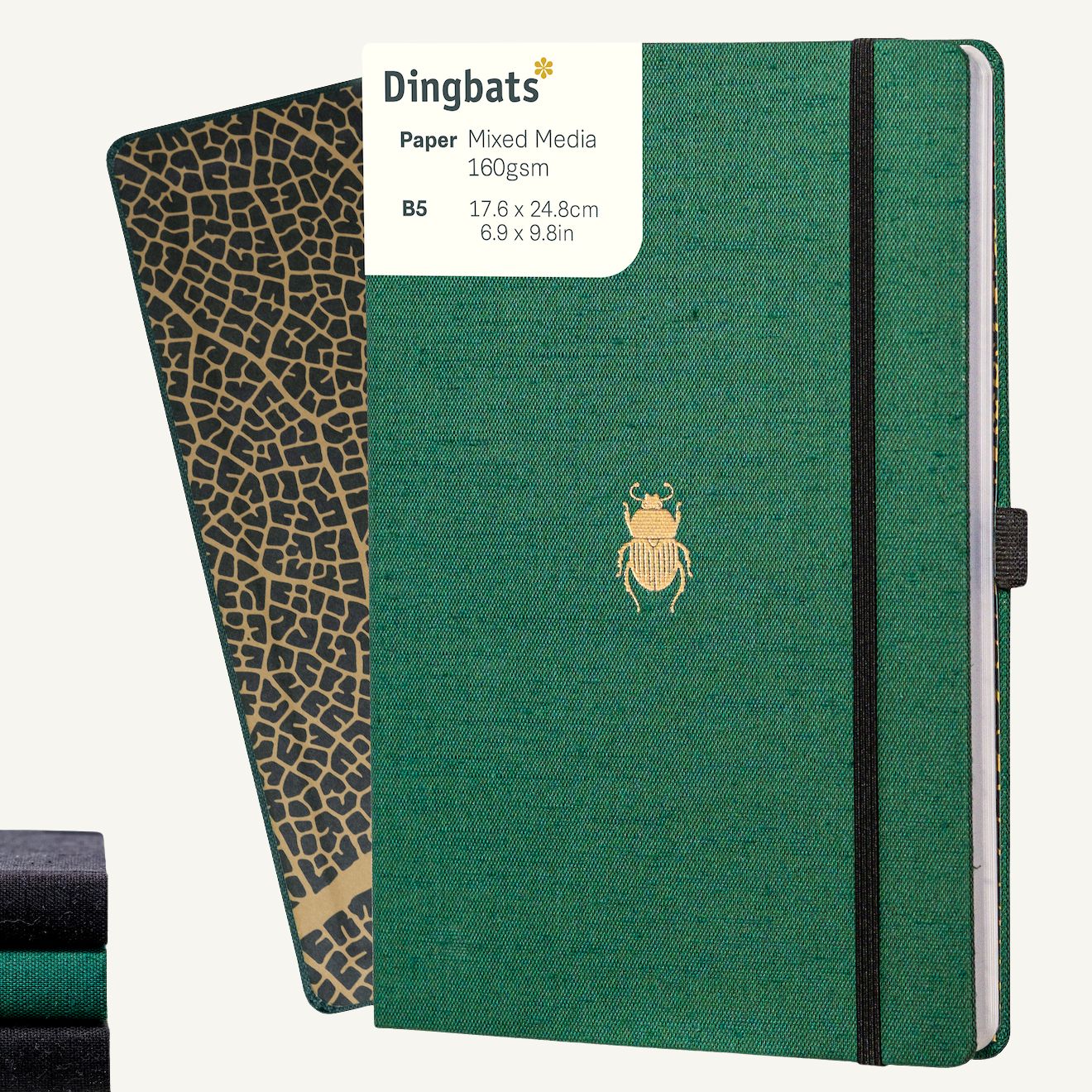
That's the inspiration behind our Sky Blue Great Barrier Reef Notebook.
The ocean-inspired cover brings a sense of calm and color to your desk, while the interior is designed to give your thoughts, plans, and ideas room to develop.
What Makes the Great Barrier Reef Notebook Special?
It features:
- A5+ format: A comfortable size for writing at home, at work, or on the go.
- 184 numbered pages: Helping you reference important notes and organize your ideas.
- 100gsm cream, acid-free paper: A smooth writing surface suitable for everyday use.
- 5mm dotted ruling: Providing flexibility for journaling, planning, and creative layouts.
- Future Log: Space to organize upcoming plans and important events.
- Index and Key pages: Designed to help keep different sections organized.
- Tab Key: Allowing you to create a personalized navigation system.
- Two bookmark ribbons: Making it easier to keep your place.
- 16 micro-perforated pages: Convenient for neatly removing individual sheets.
- Lay-flat binding, pen loop, elastic closure, and expandable pocket: Practical features designed to make everyday use easier.
The notebook also features a vegan-certified cover and FSC®-certified paper. And just as importantly, it carries the story of the remarkable ecosystem that inspired its design.

The Meaning Behind the Dingbats* Earth Collection
The Great Barrier Reef represents a vibrant underwater world.
The Serengeti celebrates the vastness of Africa's famous grasslands.
The Arctic reflects the beauty of a remarkable polar environment.
Yasuní highlights the extraordinary biodiversity of the Amazon rainforest.
And Eduardo Avaroa brings attention to the dramatic landscapes of Bolivia's high-altitude nature reserve.
Different environments.
Different stories.
But one shared inspiration.
Our planet is extraordinary, and the places that make it special deserve to be appreciated.
Frequently Asked Questions
Where is the Great Barrier Reef located?
The Great Barrier Reef is located off the northeastern coast of Australia, along the state of Queensland in the Coral Sea.
Is the Great Barrier Reef one single reef?
No. It's a vast ecosystem made up of thousands of individual coral reefs, islands, and other marine habitats.
Is coral a plant or an animal?
Coral is an animal. Most reef-building corals consist of colonies of tiny organisms called polyps that often live in partnership with microscopic algae.
Why is the Great Barrier Reef important?
The reef supports extraordinary marine biodiversity, provides essential habitats for many species, and has significant cultural, environmental, and economic value.
Can bleached coral recover?
Yes. Bleached coral can sometimes recover if stressful conditions improve, although prolonged bleaching can cause serious damage or death.
What inspired the Dingbats* Great Barrier Reef Notebook?
The notebook was inspired by the beauty, biodiversity, and ecological importance of Australia's Great Barrier Reef.
Is the Great Barrier Reef Notebook good for bullet journaling?
Final Thoughts: An Ocean Full of Stories
Beneath the waves of the Great Barrier Reef lies a world unlike anywhere else.
A world built by tiny coral animals.
Filled with colorful fish and remarkable marine creatures.
And shaped by countless relationships that help sustain one of Earth's richest ecosystems.
It's a place that reminds us just how intricate and extraordinary nature can be.
At Dingbats*, that's what inspired us to create the Sky Blue Great Barrier Reef Notebook.
Not simply because the ocean is beautiful.
But because behind that beauty lies an incredible story of biodiversity, connection, and resilience.
And through our Earth Collection, we hope to bring a little of that inspiration into the things we use every day.



Leave a comment
This site is protected by hCaptcha and the hCaptcha Privacy Policy and Terms of Service apply.