
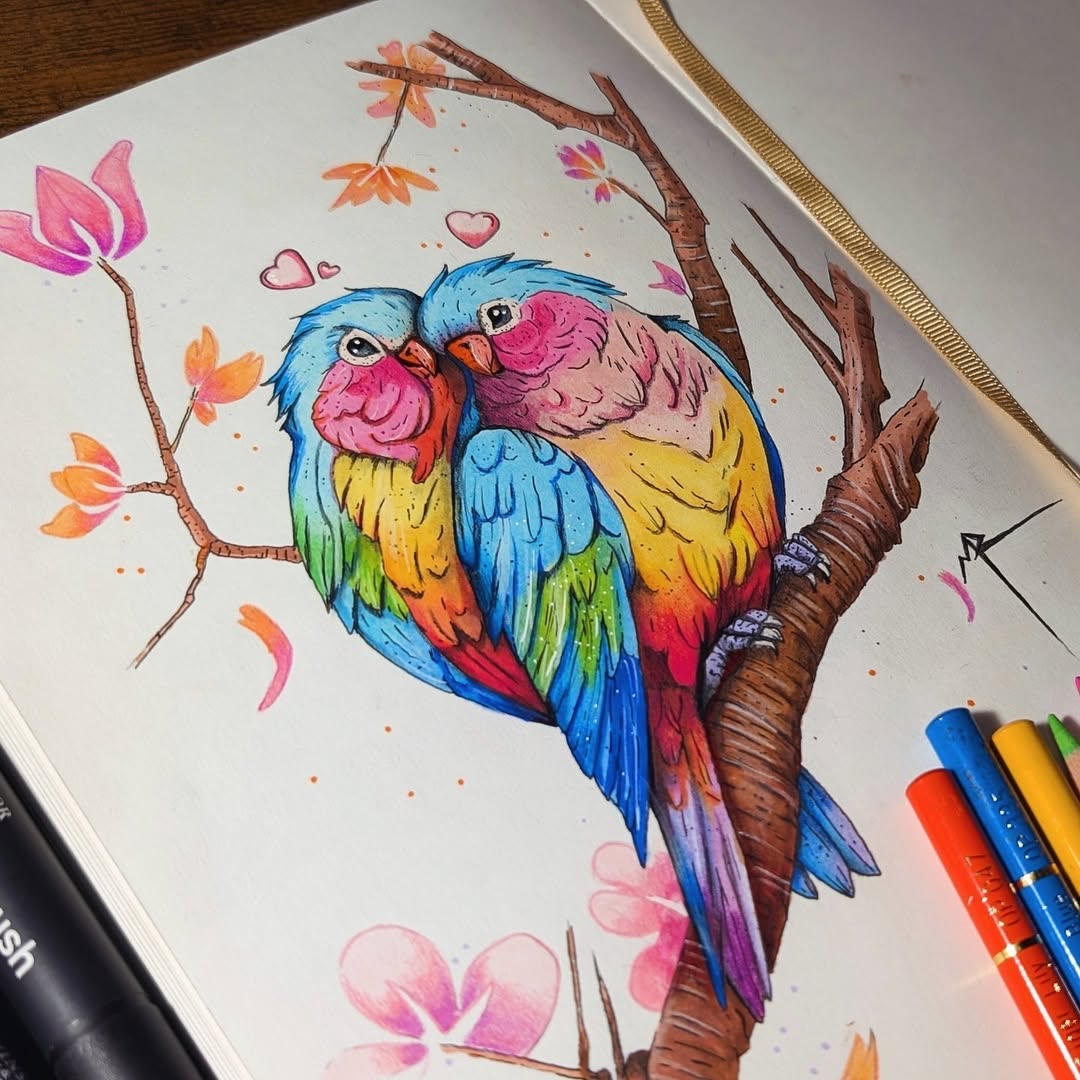
Last updated: September 2026 | A guide to doodling, visual thinking, creativity, focus, notebook margins, sketch notes, and Dingbats* notebooks
Doodles have a bad reputation. They are often treated like distractions. Like signs of boredom. Like something you do when you are not paying attention. Like little marks that do not belong beside “real” notes.
But doodles are more interesting than that.
A doodle can be a line repeated while listening.
A shape drawn during a meeting.
A flower in the corner of a page.
A face, arrow, pattern, box, spiral, animal, border, symbol, or tiny sketch that appears while your mind is working through something else.
Doodling is not always a sign that your mind has left the room. Sometimes it is a sign that your mind is trying to stay in it. People doodle when they are listening, thinking, waiting, planning, processing, remembering, and trying to make sense of information. The marks may look random, but they can reveal attention, mood, rhythm, repetition, and thought in motion. A notebook is the natural home for doodles because it gives the hand somewhere to move while the mind works.
At Dingbats*, we believe notebooks are not only for polished writing. They are for rough thinking too. The Wildlife Collection gives everyday notes and margins a personal place. The Earth Collection gives doodles, lists, and ideas more structure. The Pro Collection, with 160gsm mixed media paper, gives visual thinking more space to grow into sketches, diagrams, moodboards, calligraphy, and creative pages.
A doodle may look small. But sometimes, it is the beginning of a thought you have not found words for yet.
Quick Overview: Why We Doodle
| Reason | Why It Matters |
|---|---|
| Focus | Simple marks can help some people stay engaged during slow or repetitive moments |
| Thinking | Doodles give thoughts a visual outlet |
| Memory | Marks, symbols, and page layouts can become cues later |
| Creativity | A random shape can become a sketch, idea, pattern, or direction |
| Emotion | Doodling can reflect mood, restlessness, calm, or energy |
| Processing | Drawing small marks can help the hand move while the mind works |
| Personal style | Doodles make notebook pages unmistakably yours |
| Visual notes | Doodles can turn information into diagrams, arrows, symbols, and maps |
Doodling is not always meaningless. Sometimes it is thinking before it becomes language.
What Is Doodling?
Doodling means making informal, spontaneous marks while your attention is partly somewhere else.
It can happen during meetings, classes, calls, reading, planning, waiting, listening, or thinking. Doodles are often unplanned. They do not need to be beautiful, accurate, useful, or finished. They can be abstract or representational.
A spiral.
A flower.
A box.
A border.
A pattern.
A repeated word.
A tiny animal.
A face.
A map.
A symbol.
A shape that becomes something only after you draw it.
Common Types of Doodles
| Doodle Type | What It Looks Like |
|---|---|
| Lines | Repeated strokes, waves, loops, borders |
| Shapes | Circles, squares, triangles, grids, stars |
| Patterns | Dots, spirals, leaves, scales, stripes |
| Symbols | Arrows, hearts, question marks, icons |
| Faces | Simple expressions, profiles, eyes |
| Objects | Cups, books, plants, pens, chairs |
| Animals | Birds, cats, fish, whales, insects |
| Lettering | Names, words, initials, titles |
| Diagrams | Boxes, arrows, maps, connections |
A doodle does not need to become art. It only needs to let the page hold what the hand wanted to do.
Why Doodling Feels Natural
Doodling feels natural because the mind and body rarely sit completely still. When we listen, think, wait, or process information, the hand often wants to move. That movement can become tapping, fidgeting, underlining, circling, sketching, or doodling in the margin.
The mark gives the moment a rhythm. Sometimes doodling fills time. Sometimes it helps regulate attention. Sometimes it reflects boredom. Sometimes it helps keep the mind lightly engaged. Sometimes it is simply the hand following a thought that has not become words yet.
Moments When People Doodle
| Moment | Why Doodling Appears |
|---|---|
| During a meeting | The hand moves while listening |
| On a phone call | The page becomes a place for attention |
| While studying | Notes turn into symbols, arrows, and sketches |
| While waiting | Doodles fill empty time |
| During planning | Shapes help organize thinking |
| While reading | Margins become a place to react |
| During creative work | Marks become early visual ideas |
| When bored | The page gives restlessness somewhere to go |
Doodling is not always separate from thinking. Sometimes it is part of how thinking feels.
Doodling and Focus
Doodling is often misunderstood as proof that someone is not paying attention. But attention is more complicated than that. In some situations, especially slow, repetitive, or low-stimulation ones, a simple secondary activity may help some people remain lightly engaged instead of drifting completely into daydreaming. That does not mean doodling always improves focus, or that every doodle is useful. It means the relationship between doodling and attention is more nuanced than “doodling equals distraction.” A small mark in the margin may be less distracting than the mind leaving the room entirely.
When Doodling May Help Focus
| Situation | Why It May Help |
|---|---|
| Long calls | Gives the hand something simple to do |
| Slow meetings | Keeps attention lightly anchored |
| Repetitive listening | Reduces the urge to drift |
| Planning sessions | Lets ideas move visually |
| Reading notes | Helps mark attention and response |
| Waiting periods | Gives restlessness a harmless outlet |
Doodling is most useful when it stays simple enough not to take over the main task. The doodle should support attention. Not replace it.

When Doodling Becomes a Distraction
Doodling is not automatically helpful. Sometimes it can become distracting, especially if the drawing becomes too complex, too absorbing, or more interesting than the thing you are supposed to be doing. There is a difference between lightly shading a shape while listening and designing a full illustrated page during an important conversation. One supports attention. The other may steal it.
Helpful Doodling vs Distracting Doodling
| Helpful Doodling | Distracting Doodling |
|---|---|
| Simple marks | Complex drawings |
| Low effort | Requires too much attention |
| Happens beside listening | Replaces listening |
| Supports note-taking | Avoids the task |
| Easy to stop | Hard to stop |
| Leaves space for key notes | Takes over the page |
| Helps ideas connect | Pulls focus away completely |
The goal is not to doodle more. The goal is to understand when doodling is helping and when it is becoming the main event.
Doodling as Visual Thinking
Some thoughts do not begin as sentences. They begin as shapes.
A circle around an idea.
An arrow between two points.
A box around a task.
A spiral while thinking.
A map of a process.
A quick sketch of an object.
A symbol that stands in for a feeling, project, or person.
This is where doodling becomes visual thinking. The mark helps make something visible before it is fully explained.
How Doodles Support Visual Thinking
| Doodle | Thinking Function |
|---|---|
| Arrow | Shows connection or direction |
| Box | Groups related ideas |
| Circle | Marks importance |
| Spiral | Shows repetition or uncertainty |
| Map | Shows place, sequence, or movement |
| Icon | Represents an idea quickly |
| Sketch | Makes a visual concept concrete |
| Pattern | Captures mood, rhythm, or texture |
A doodle can become a diagram. A diagram can become a plan. A plan can become the beginning of a project.
Why Doodles Belong in Notebook Margins
Margins are natural places for doodles. They are the side spaces where thoughts appear before they know where to go.
The main page holds the information. The margin holds the response.
What Doodles in Margins Can Do
| Margin Doodle | What It Shows |
|---|---|
| Star | This matters |
| Arrow | This connects |
| Question mark | This needs thought |
| Small sketch | This has a visual idea |
| Repeated pattern | This was a thinking moment |
| Box | This belongs together |
| Face or symbol | This has a mood |
| Border | This page has importance |
Margins remind us that thinking is not always linear. Some of the best notes happen beside the main notes.

Doodles as Memory Cues
A doodle can become a memory cue.
You may remember a meeting because of the strange arrow you drew beside a decision.
You may remember a page because of the flower in the corner.
You may remember a book note because of the symbol you used.
You may remember a project because of a rough sketch beside the first idea.
Visual marks help pages become recognizable. They give memory another path back to the information.
How Doodles Help You Find Ideas Later
| Doodle Element | Memory Cue |
|---|---|
| Symbol | Marks the type of note |
| Sketch | Connects the idea to an image |
| Border | Makes the page stand out |
| Color | Signals category or mood |
| Arrow | Shows relationship between ideas |
| Repeated icon | Creates a personal system |
| Layout | Helps you remember where things were |
| Pattern | Makes the page visually distinct |
Doodling and Creativity
Doodling is often creative because it lowers the pressure.
You are not trying to make finished art.
You are not trying to create a perfect sketch.
You are not trying to impress anyone.
You are simply making marks.
That freedom matters. Many creative ideas begin when the pressure is low enough for something unexpected to appear.
A random shape can become a pattern.
A pattern can become a cover idea.
A cover idea can become a product direction.
A small sketch can become a campaign visual.
A margin symbol can become a logo thought.
A repeated line can become a design element.
Creative Uses for Doodles
| Doodle Type | Creative Use |
|---|---|
| Patterns | Backgrounds, borders, textures |
| Shapes | Design layouts, product ideas |
| Lettering | Titles, names, campaign phrases |
| Small icons | Symbols, visual systems |
| Animals | Character, nature-inspired ideas |
| Objects | Product sketches or visual references |
| Arrows and maps | Structure, flow, storytelling |
| Abstract marks | Mood, rhythm, atmosphere |
Creativity does not always start with a finished concept. Sometimes it starts with the hand moving.
Doodling During Meetings
Meeting doodles can be especially interesting because they sit between attention and thought.
A doodle beside a meeting note can show what mattered, what felt unresolved, what connected, or what needed action. It can also help make pages easier to scan later.
The key is to keep doodling simple enough that it does not replace listening.
Meeting Doodles That Help
| Doodle | How to Use It |
|---|---|
| Box | Around decisions |
| Arrow | Between connected points |
| Star | Beside important action items |
| Question mark | Beside open questions |
| Clock | Beside deadlines |
| Person icon | Beside names or ownership |
| Lightbulb | Beside ideas |
| Flag | Beside follow-ups |
A meeting page does not need to be plain to be useful. It needs to make the information easier to understand later.

Doodling While Planning
Planning often becomes clearer when it is visual. A list is useful, but sometimes a plan needs arrows, boxes, maps, timelines, diagrams, and symbols. Doodling can help you see how pieces relate to each other. A project is rarely just a straight list.
It has dependencies.
People.
Dates.
Ideas.
Risks.
Questions.
Decisions.
Revisions.
Loose ends.
Doodles help those relationships appear on the page.
Planning Doodles to Try
| Planning Doodle | Use It For |
|---|---|
| Timeline | Project phases and deadlines |
| Flowchart | Process steps |
| Mind map | Idea expansion |
| Boxes | Task categories |
| Arrows | Dependencies and connections |
| Icons | Quick visual labels |
| Circles | Priorities |
| Ladders or steps | Progress |
Planning is not only about writing what needs to happen. It is about seeing how things fit together.
Doodling While Reading
Doodling while reading can turn the margin into a place of response.
A symbol beside a quote.
A small sketch beside a scene.
A question mark beside an argument.
An arrow connecting two ideas.
A tiny icon to mark a recurring theme.
These marks can make reading more active. They help you show where your attention paused.
Reading Doodles and Symbols
| Mark | Meaning |
|---|---|
| ★ | Favorite line |
| ? | Confusing or questionable |
| ! | Surprising |
| → | Connects to another idea |
| ○ | Theme or repeated idea |
| Eye | Something to notice |
| Book icon | Reading reference |
| Lightbulb | Idea sparked |

Doodling for Personal Memory
Doodles can hold memory because they capture the mood of a moment.
A quick drawing of a cafe table.
A rough map of a walk.
A tiny sketch of a ticket.
A flower from a place you visited.
A symbol for a person.
A border around a date that mattered.
These marks may not look important at the time, but later they can bring back the feeling of a day.
Memory Doodles to Add to a Notebook
| Doodle | What It Can Remember |
|---|---|
| Map | A walk, route, trip, or place |
| Object | Something you used, loved, or kept |
| Food sketch | A meal or cafe |
| Flower or leaf | A season or outdoor memory |
| Weather icon | The atmosphere of a day |
| Small animal | A sighting, symbol, or mood |
| Ticket outline | An event or journey |
| Room layout | A place you want to remember |
Memory is not always written. Sometimes it is drawn in the corner.

Doodling as a Personal Style
Everyone doodles differently.
Some people draw patterns.
Some draw boxes.
Some draw flowers.
Some draw arrows.
Some draw animals.
Some shade shapes.
Some repeat words.
Some make tiny faces.
Some build whole visual systems without realizing it.
Over time, your doodles can become part of your notebook style. They make the pages recognizable as yours.
What Your Doodles Might Reveal
| Doodle Habit | What It May Show |
|---|---|
| Repeated patterns | Rhythm, calm, or concentration |
| Arrows | Connection-making |
| Boxes | A need to organize |
| Flowers or leaves | Attraction to natural forms |
| Faces | People, emotion, expression |
| Animals | Symbolism, humor, observation |
| Lettering | Love of words and titles |
| Maps | Spatial thinking and movement |
Doodles are not a personality test. But they can reveal what your hand returns to when it has space.
The Difference Between Doodling, Sketching, and Drawing
Doodling, sketching, and drawing overlap, but they are not the same. Understanding the difference can make the page feel less intimidating.
Doodling vs Sketching vs Drawing
| Practice | What It Means |
|---|---|
| Doodling | Informal, spontaneous marks, often made while thinking or listening |
| Sketching | A quick visual study or rough version of an idea |
| Drawing | A more intentional image or finished visual piece |
A doodle can become a sketch. A sketch can become a drawing. But it does not have to. Doodling is valuable because it does not ask for skill first. It asks for movement.
Doodling for People Who “Can’t Draw”
You do not need to know how to draw to doodle. Doodling is not about accuracy. It is about mark-making. Lines, arrows, boxes, circles, borders, simple leaves, dots, stars, waves, and tiny icons all count. You can create useful visual notes without drawing anything realistic.
Easy Doodles Anyone Can Use
| Simple Doodle | Use |
|---|---|
| Arrow | Show direction or connection |
| Box | Group an idea |
| Star | Mark importance |
| Circle | Highlight something |
| Dots | Create pattern or emphasis |
| Wave | Divide a page |
| Leaf | Add a natural marker |
| Flag | Mark a follow-up |
| Lightbulb | Mark an idea |
| Clock | Mark a deadline |
Doodling is not about being good at art. It is about giving thought another way to appear.
How to Start a Doodle Notebook
A doodle notebook can be completely simple. You do not need a theme, style, or plan. Start with pages that let marks appear naturally.
Simple Doodle Notebook Setup
| Page | What to Use It For |
|---|---|
| Pattern page | Lines, dots, waves, grids, borders |
| Symbol key | Icons for ideas, tasks, questions, memories |
| Meeting margin page | Notes with doodles beside them |
| Idea map page | Arrows, boxes, and connections |
| Memory sketch page | Small drawings from daily life |
| Animal doodle page | Quick wildlife-inspired marks |
| Lettering page | Titles, initials, words, phrases |
| Creative test page | Shapes, colors, swatches, layouts |
A doodle notebook does not need to look impressive. It needs to make starting easy.
Doodle Page Ideas
When you do not know what to doodle, begin with small things.
Doodle Ideas for Your Notebook
| Idea | What to Draw |
|---|---|
| Today’s weather | Sun, cloud, rain, wind, moon |
| Desk objects | Pen, notebook, cup, lamp, book |
| A simple map | Walk, commute, trip, room |
| Repeated pattern | Dots, waves, leaves, lines, spirals |
| Animal symbol | Whale, duck, tiger, bee, bird, fish |
| Mood icon | Face, color, shape, symbol |
| Meeting symbols | Stars, arrows, boxes, flags |
| Book response | Tiny icons beside quotes |
| Food memory | Coffee cup, plate, fruit, pastry |
| Project flow | Boxes, steps, arrows, timeline |
The best doodle is the one that makes the page less blank.
Doodling and the Dingbats* Wildlife Collection
A Wildlife notebook can hold meeting notes, personal lists, reading reactions, travel observations, and small doodles in the margins.
Use Wildlife For
| Doodle Type | Why It Works |
|---|---|
| Margin doodles | Adds personality to everyday notes |
| Travel sketches | Captures place, routes, and details |
| Animal doodles | Connects naturally to the cover theme |
| Reading symbols | Makes notes more visual |
| Personal memory marks | Helps pages feel more alive |
| Daily patterns | Creates a recognizable notebook style |
Wildlife is for doodles that feel personal and spontaneous. The kind that happen while life is moving.
Doodling and the Dingbats Earth Collection
The Dingbats* Earth Collection works well for structured doodling.
That may sound like a contradiction, but some doodles are useful because they create order: boxes, arrows, icons, symbols, maps, trackers, and diagrams.
Use Earth For
| Doodle Type | Why It Works |
|---|---|
| Planning icons | Adds clarity to task lists |
| Habit tracker symbols | Makes routines visual |
| Meeting diagrams | Connects notes and decisions |
| Project maps | Shows structure and flow |
| Index symbols | Makes pages easier to scan |
| Monthly review icons | Adds visual memory to reflection |
Earth is for doodles that help organize thought. A small symbol can make a whole page easier to use.
Doodling and the Dingbats* Pro Collection
The Dingbats* Pro Collection is the strongest fit for doodling that wants to grow.
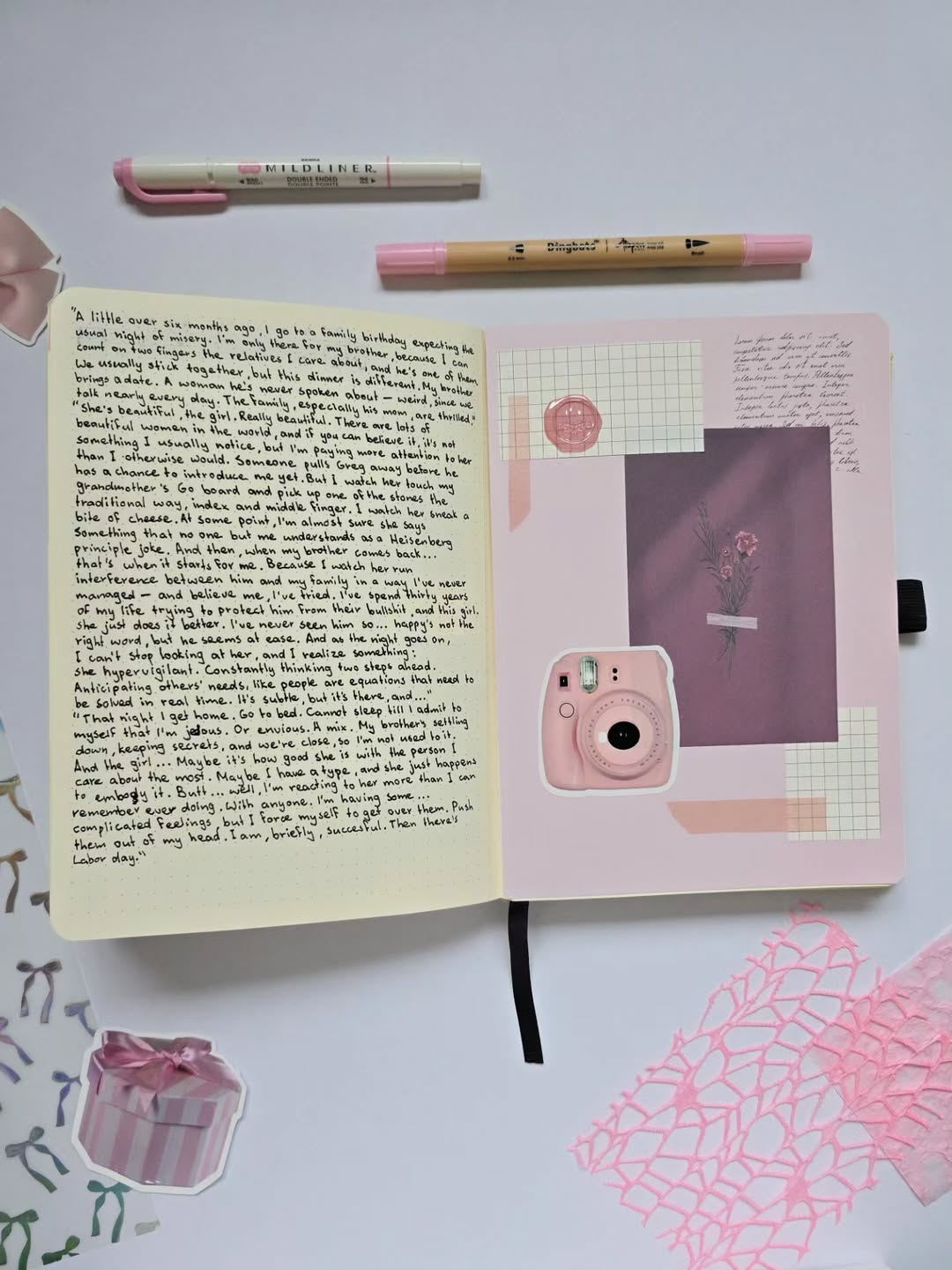
With 160gsm mixed media paper, Pro supports sketches, visual notes, brush pens, markers, calligraphy, moodboards, light washes, and creative experimentation.
Use Pro For
| Doodle Type | Why It Works |
|---|---|
| Sketch development | Turn small marks into visual ideas |
| Moodboards | Combine doodles, notes, swatches, and references |
| Brush pen titles | Make words more expressive |
| Marker tests | Explore color and emphasis |
| Diagrams | Make complex thoughts visible |
| Creative patterns | Develop motifs and textures |
| Light washes | Add atmosphere to visual notes |
| Mixed media pages | Layer marks, scraps, and ideas |
Pro is for the doodle that does not want to stay in the margin. It gives small marks room to become something more.

Doodle Exercises for Better Thinking
Doodling can become a thinking practice when you use it intentionally. Try these simple exercises.
Doodle Exercises
| Exercise | How to Do It |
|---|---|
| One-minute pattern | Fill a small space with repeated lines or shapes |
| Meeting symbol key | Create icons for decisions, questions, ideas, and follow-ups |
| Idea map | Write one idea in the center and doodle connections around it |
| Memory sketch | Draw one object from the day and write a caption |
| Mood shape | Draw a shape that matches your current mood |
| Visual list | Replace some list words with icons |
| Page border | Create a border that reflects the topic |
| Doodle review | Look back and notice repeated marks |
These exercises are not about making art. They are about making thought visible.
A Simple Doodle Symbol Key
A symbol key can turn doodles into a useful note-taking system.
Doodle Symbol Key
| Symbol | Meaning |
|---|---|
| ★ | Important |
| ? | Question |
| ! | Surprising |
| → | Connection |
| □ | Task |
| ✓ | Done |
| 💡 | Idea |
| ⏳ | Later |
| ⚑ | Follow-up |
| ○ | Theme |
| ✦ | Favorite |
| ↺ | Review |
Use symbols consistently enough that your pages become easier to scan, but not so strictly that the system becomes hard to maintain. A good symbol system should make notes easier. Not slower.
A Simple Doodle Review Page
At the end of a notebook, look back at your doodles. They may reveal more than you expect.
Doodle Review Template
| Prompt | Your Notes |
|---|---|
| What shapes did I repeat most? | |
| What symbols became useful? | |
| What pages have the most doodles? | |
| What was I doing when I doodled most? | |
| Did any doodles become ideas? | |
| What mood do the pages carry? | |
| What visual style feels like mine? | |
| What do I want to carry into the next notebook? |
Doodles can become part of a notebook’s identity. They show how your hand moved while your mind was busy.
How to Keep Doodling Useful
Doodling works best when it supports the page instead of overwhelming it.
Simple Rules for Useful Doodling
| Rule | Why It Helps |
|---|---|
| Keep it simple during meetings | Listening still comes first |
| Leave space for notes | Doodles should not crowd important information |
| Use symbols repeatedly | Builds a useful visual language |
| Let some doodles stay random | Not everything needs purpose |
| Use heavier paper for wetter tools | Helps if you use markers, brush pens, or washes |
| Review visual pages | Some doodles become useful later |
| Avoid judging skill | Doodling is not about perfect drawing |
A doodle does not need to justify itself. But it should not make the page harder to use.
Frequently Asked Questions
Why do people doodle?
People doodle for many reasons: boredom, focus, restlessness, creativity, visual thinking, memory cues, emotional processing, and habit. A doodle can be a simple way for the hand to move while the mind is working.
Does doodling help you focus?
Sometimes, depending on the situation and the person. Simple doodling may help some people stay lightly engaged during slow or repetitive tasks, but complex doodling can become distracting.
Is doodling a waste of time?
No. Doodling can be useful when it helps you think, focus, remember, process information, or generate ideas. It does not need to become finished art to have value.
What is the difference between doodling and drawing?
Doodling is informal and spontaneous. Drawing is usually more intentional. A doodle can become a drawing, but it does not have to.
Can doodling help with note-taking?
Yes. Doodles, symbols, arrows, boxes, diagrams, and icons can make notes easier to scan, remember, and understand.
What should I doodle in a notebook?
Start with simple marks: arrows, stars, boxes, flowers, leaves, maps, weather icons, faces, patterns, symbols, and small objects from your day.
Which Dingbats* notebook is best for doodling?
The Wildlife Collection works well for everyday margin doodles and personal notes. The Earth Collection works well for structured symbols, planning icons, and diagrams. The Pro Collection is best for sketches, visual notes, markers, brush pens, moodboards, and mixed media pages.


Leave a comment
This site is protected by hCaptcha and the hCaptcha Privacy Policy and Terms of Service apply.